_and_Spencer_009.jpg?format=webp&width=3840&quality=75)
Despite the devastation caused by sight loss, 70% of adults receive no support within the first 12 months of diagnosis and are likely to encounter poor education, high unemployment, depression, loneliness and financial insecurity throughout their lifetime.
Our new centres will enable us to provide tailored support to more people and their families who desperately need help adjusting to living with sight loss. The new facilities will enable more training, such as learning practical skills and tips to make everyday activities easier to manage, utilising technology, and using a white cane to navigate around, providing people with the confidence to get out and about.
And, as our centres bring together both our life skills services and our canine services, we'll be able to create more vital guide dog partnerships and My Sighted Guide partnerships, where a person with sight loss is matched with a volunteer who helps them get out and re-engage in their local community. We'll also be able to expand our companion dogs services, to provide a canine friend into the lives of adults living with sight loss to reduce isolation, loneliness and increase confidence.
Currently, we are supporting over 4,950 people in the UK who have had their lives positively changed through the partnership with a guide dog. A truly life-changing partnership that lasts up to eight years. Not only do our iconic dogs provide mobility and independence to people with sight loss, but they also give them the confidence to pursue their ambitions and live the lives they choose.
Our new centres will include flexible indoor and outdoor spaces and the facilities to implement our improved guide dog training method called Standardised Training for Excellent Partnerships (STEP). This will enable us to train our guide dogs more quickly and increases success rates for guide dogs and their owners. This means more people will benefit from a life-changing guide dog partnership.
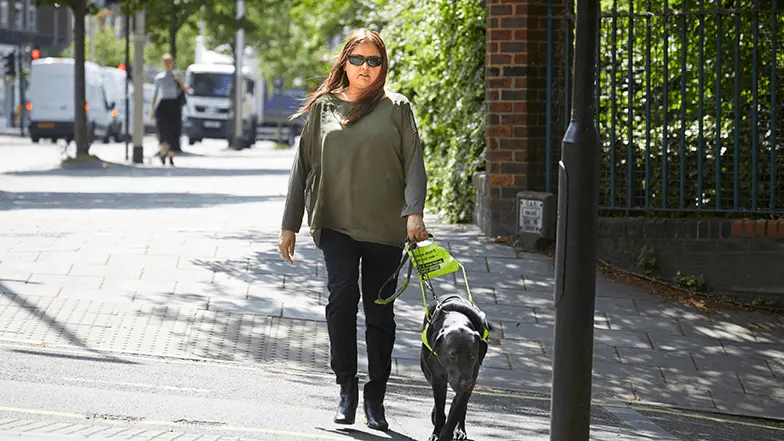
Bhavini began losing her sight after developing retinitis pigmentosa aged 17, which was devastating. She cancelled her plans to go to university and didn’t want anyone to know what was happening to her.
A rehabilitation officer encouraged Bhavini to sign up for evening classes at college, and she moved to east London after she got married. Learning to live in a bigger city was a big adjustment, so she started using a long cane to help her get around. But a new job requiring regular travel across central London on public transport convinced Bhavini to apply for a guide dog as she was nervous travelling alone. When she was partnered with Colin in 2018, Bhavini developed the confidence to travel independently without relying on others.
She says: “My partnership with Colin is absolutely brilliant. He’s given me so much independence, and we don’t go anywhere without each other.
“Before having Colin, simple things like booking a hairdresser appointment were so difficult as I would have to wait for my husband to take me, and we would have to bring our young children. Now, Colin and I can just get on the bus, go to the shopping centre and find the hairdressers completely stress-free.”
“I also used to panic about picking my children up from school. Trying to navigate many obstacles on the street and, with other children leaving the local schools, was hard work. Now it feels like a weight has been lifted. I can pick up my daughter without the stress. I can get my coat, slip on Colin’s harness and just go.”
Get in touch to help people like Bhavini on 0800 953 0113 or email major.relationships@guidedogs.org.uk
I used to panic so much about picking my children up from school. Trying to navigate so many obstacles was hard work. Now it feels like a weight has been lifted. I can get my coat, slip on Colin’s harness and just go.