Volunteering essentials
Everything you need to know for volunteering at Guide Dogs, including claiming expenses, ordering clothing and how we keep things safe and legal.
Whether you’re new to volunteering or have plenty of experience, our volunteer handbook provides a useful overview of volunteering at Guide Dogs, from practical information to keep you and others safe to what you can expect from volunteering with us.
One of the things that makes volunteering so rewarding is that it’s built on a shared sense of trust and understanding. To support that, our Volunteer Agreement outlines what you can expect from us and what we ask from you in return.
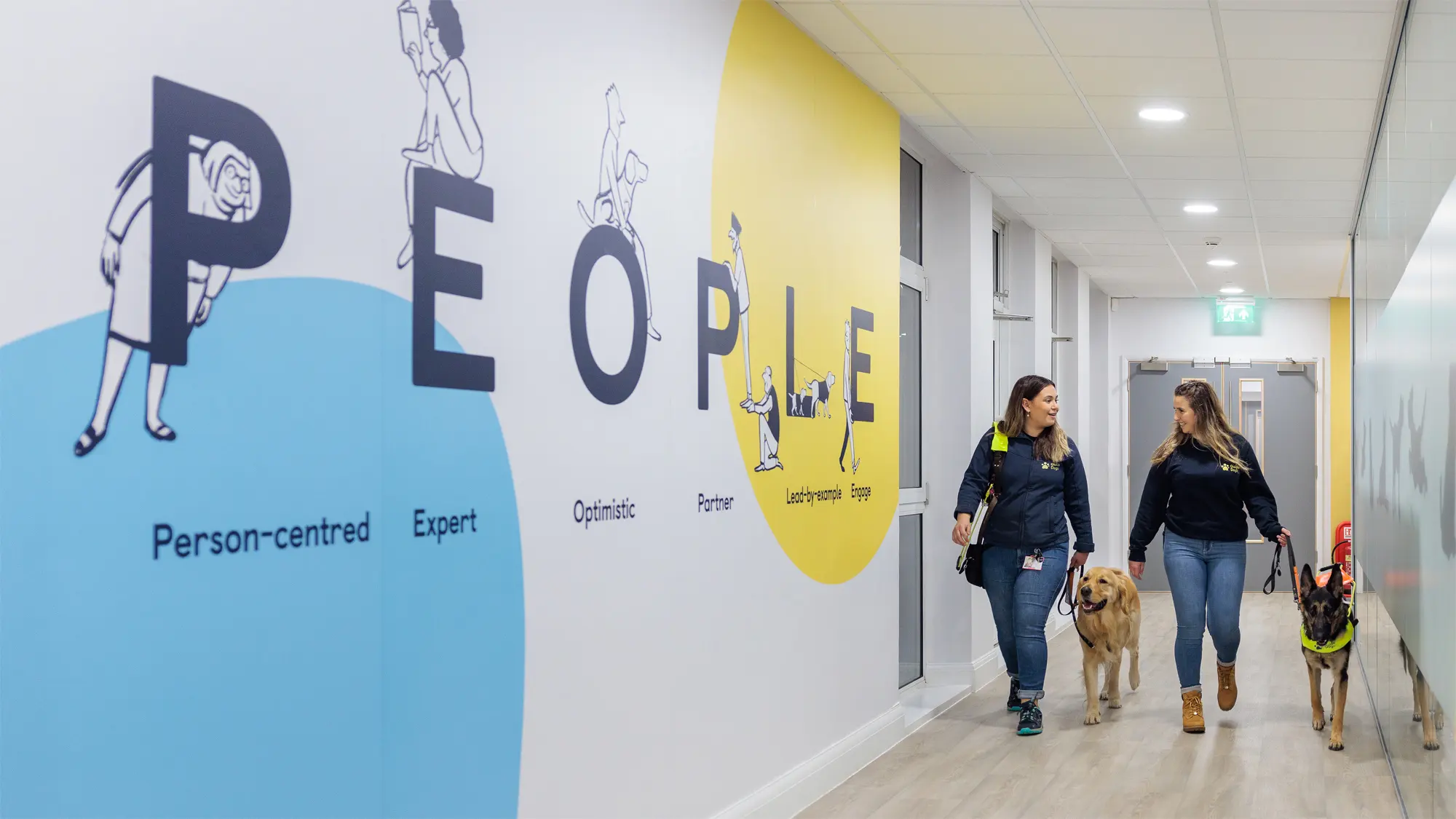
Our PEOPLE behaviours shape who we are, what we do, and more importantly, how we do it.
Whether you’re a volunteer or a volunteer manager (i.e. a staff member), we share a commitment to live our PEOPLE behaviours to ensure our work or volunteering (activities, tasks and interactions) not only provides the best outcome for people with sight loss but also values and respects everyone involved in what we do.
The behaviours reflect how we are but also how we aspire to be.
To help you remember our behaviours, they spell out the acronym PEOPLE. We describe each behaviour below along with a couple of examples of what each behaviour can mean in practice.
We are a group of people working to help each person affected by sight loss. We listen, and recognise that every individual is different in where they’ve come from and where they’re going. We are open, empathetic and inclusive. We place the person at the centre of every decision.
For example, we:
respect other people’s beliefs and ways of thinking
We are specialists in what we do. We are committed to excellence and will never stop innovating. We respect our history, but seek out ways to adapt and improve, and are always willing to learn.
For example, we:
value others’ work and trust in expert opinion
We are relentless in our belief that people with vision impairment can lead the life they choose. We are passionate about helping each person, committed to challenging barriers, and proud of who we are and what we achieve.
For example, we:
willingly challenge unacceptable behaviour in a constructive way
We only change lives when we collaborate. We build valued relationships with donors. We work together with our service users and colleagues, volunteers and partners – and our dogs, of course – to deliver great outcomes. We support and develop each other.
For example, we:
trust each other
We can all be a guide. We take the lead, and then hand it over, empowering people to make progress without us. We gain trust by having faith in others, and influence by example. We do what we say we will.
For example, we:
empathise, rather than leading with our own opinions
We cannot change lives if we look on from the side-lines. We get involved, take ownership, and feel responsible for all we do, think and say. We celebrate wins big and small, and we hold ourselves and each other to account.
For example, we:
comply with requirements that are in place to protect people and the organisation
Thank you to all our our amazing volunteers
We want to hear what you have to say
Volunteering is an essential part of Guide Dogs that supports people with sight loss to live the life they choose. We always do our best to support our volunteers and listen to any feedback. But sometimes, the relationship between Guide Dogs and volunteers can take an unexpected turn. When this happens, we hope that most issues can be resolved easily and informally, through conversation – for both parties.
To assist cases where this isn’t possible, we have formal procedures in place setting out a complaints process for volunteer concerns and a problem-solving process for concerns we have about volunteers.
In short, we want to ensure that any concerns can be addressed consistently and fairly. Our procedures are there to give clarity to both staff and volunteers on how an issue should be treated and what to expect from the process.
Under the law, there is a clear distinction between volunteers and employees or paid workers, and as such, volunteers do not benefit from the same legal protections as employees or paid workers. As a result, there is no legal obligation for Guide Dogs to investigate complaints raised by volunteers about their experiences or to follow a fair process to deal with concerns we may have about volunteers. But despite a lack of legal obligation, we feel that we have a moral duty to ensure we’re treating our volunteers fairly and reasonably.
If you have a concern related to your volunteering experience, you can use our Volunteer Complaints Procedure to help find a resolution.
As previously mentioned, we hope most issues can be resolved informally by giving us feedback. If the issue hasn’t been resolved informally, or you feel that the concern is too serious and needs to be addressed formally, you’ll need to let an appropriate person know. In most cases, this will be your volunteer manager.
It’s possible that we might feel that the concern you’ve raised is too serious to be dealt with informally and needs to be investigated and recorded, which means we’ll follow our complaints procedure. If we have got something wrong, or failed to live up to our organisational behaviours, we want to make sure we learn from this and can make changes where we need to.
If we have a concern about a volunteer’s behaviour or capability to carry out their role, we will use our Volunteer Problem-Solving Procedure to guide us towards a resolution.
As with complaints, we aim to resolve any concerns informally. If we’re unable to do so, or the issue is one that needs to be formally recorded, we will open a formal problem-solving process.
_and_Buster_005.jpg?format=webp&width=3840&quality=75)
On this page you’ll find relevant policies, procedures and guidance for compliance areas such as health and safety, safeguarding, insurance and data protection.