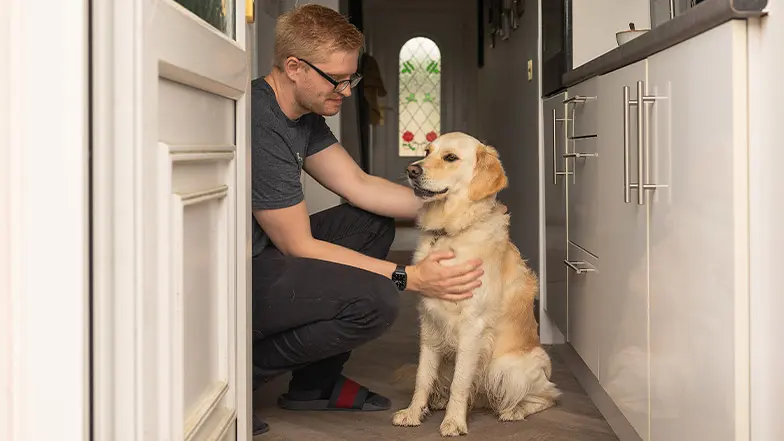
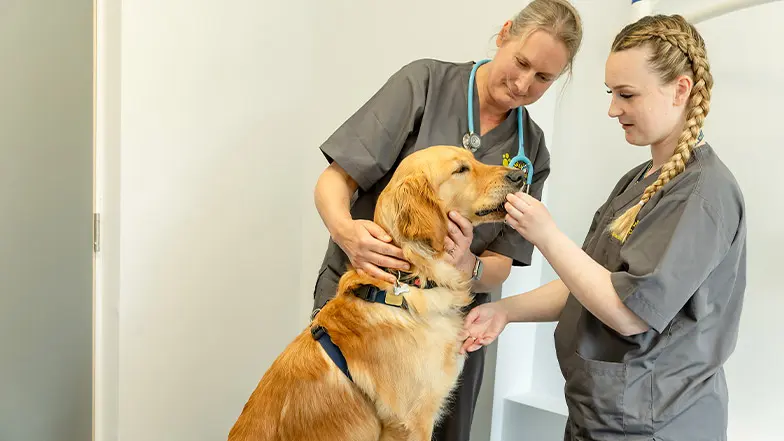
A dog health check is giving your canine companion a check-up. This includes examining their eyes, ears, mouth, body, skin, legs, paws, tail, and private areas. By understanding what’s normal for your dog, you can more easily spot when there are changes that should be checked by a vet. It's an essential aspect of dog care that you can perform at home to help ensure your dog stays healthy and happy.

Guide Dogs is committed to the highest standards of dog welfare, operating on the knowledge that the welfare of our dogs is inseparable from the wellbeing of our service users. Our staff, volunteers, and service users, undergo comprehensive training in dog care and welfare, to ensure close adherence to our key welfare principles.
We create educational and informative content to share our 90-plus years’ worth of canine expertise. This content is periodically reviewed as we continue to embrace new knowledge and scientific insights to improve how we breed, raise, train, and partner our dogs.
Whilst Guide Dogs may be able to suggest various third-party websites and third-party products when pertaining to dog care, those are not endorsed by Guide Dogs. Guide Dogs has no control over those third parties and cannot be held responsible for the accuracy of information and support they can provide or the suitability and quality of any products or services they provide.
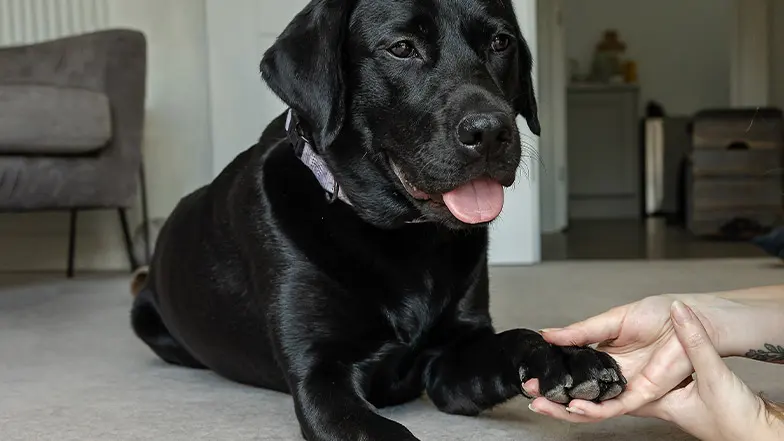
Taking care of your dog's health is crucial for their physical and mental wellbeing as well as your peace of mind. Regular check-ups can help to catch any health issues early, leading to more effective treatment and a speedier recovery. Performing these health checks at home also strengthens the bond between you and your dog and helps you to recognise changes in behaviour or appearance that might indicate something is wrong.
Before you start your dog’s health check be sure to think about the following aspects to ensure a positive and successful experience for your dog.

You should always start at your dog's eyes and head, often considered the "clean end", and work your way down to their bottom, sometimes referred to as the "dirty end".
During a health check, if you spot anything that doesn't look or feel right, don't hesitate to contact your vet.
Check your dog's face for symmetry – both sides should be the same, with no drooping. Make sure their head is straight without tilting to one side. Note if your dog is happy with you touching their face, a reluctance to allow you to touch a certain area or a squeak or whimper may indicate a problem.
Check for any discharge, excessive wetness or crusting around your dog’s eyes.
Your dog’s ears should be in their natural position and feel the same temperature as the rest of their body. Ensure there’s no swelling or lumps, and while some earwax is normal, the inside of their ear should be free from discharge, not red, crusty, or foul-smelling.
Your dog’s nose should be free of discharge or excessive crusting. While examining, monitor for signs of flinching, whining, growling, or barking, which could indicate discomfort or pain.
Your dog’s jaw should open and close easily, allowing them to eat without trouble. Excessive drooling or pawing at the mouth indicates that something is wrong.
Finally, gently and carefully check your dog's teeth. They shouldn't be broken or wobbly. Remember, plaque and tartar can build up, so follow advice from your vet or Dog Welfare Specialist to avoid dental disease. Bad breath, a foul-smelling mouth, or a reluctance to eat can be a sign that something could be wrong and needs checking by your vet.
Gently run your hands over your dog's body, ensuring both sides feel the same and are symmetrical. Check that each shoulder is the same size and shape and that your dog’s body temperature feels even over their body with no hot areas.
Applying only slight pressure, your dog's ribs should be easy to feel beneath their coat and you should be able to feel an indent at their waist. Their body mass should be spread equally across their body without any large pockets of fatty tissue sitting in one place. Being able to feel your dog’s ribs and waist is a sign that your dog is at a healthy weight.
Dogs communicate their feelings through their body language, so always pay attention to their cues during their health check. If they show signs of distress or discomfort, such as lip-licking or turning away from you, take a break to make sure your dog feels happy and positive about health checks.

There are many common health conditions that your dog may suffer from at some point in their life. By being aware of these conditions, you’re more likely to spot symptoms or anything unusual during their health check and in everyday life.
If you notice anything unusual during your dog health checks, don't hesitate to contact your vet for advice. Home health checks are an important part of looking after your dog and should be carried out regularly, but they shouldn’t replace routine vet visits for vaccinations and check-ups. If you suspect your dog or guide dog is unwell, always contact your vet for advice.
For guide dog owners with general questions (non-urgent), please contact Guide Line, who will be happy to help with any queries or concerns.
Their breathing should be regular and rhythmic, and they should breathe comfortably without any difficulty or wheezing.
Inspect your dog's skin and coat for the following:
Gently feel your dog's legs in turn and then move onto their paws. Lift each leg in the direction it bends naturally to avoid causing discomfort to your dog. Make sure you:
Your dog's tail should be held in a natural relaxed position and move easily. You should feel for any areas of damage, swelling, hair loss or chewing. Be gentle with your dog's tail, it is a highly sensitive area of the body.
Your dog's genitals should generally be clean and without swelling or foul smell.
Check for signs of irritation, itchiness, or any unusual lumps or hardened areas in this region. If your dog is persistently chewing at their bottom, it's a good idea to seek advice from your vet.
Both male and female dogs have nipples, typically arranged in two rows across their chest and abdominal area, totalling around ten. These nipples shouldn’t have any lumps, discharge or swelling.