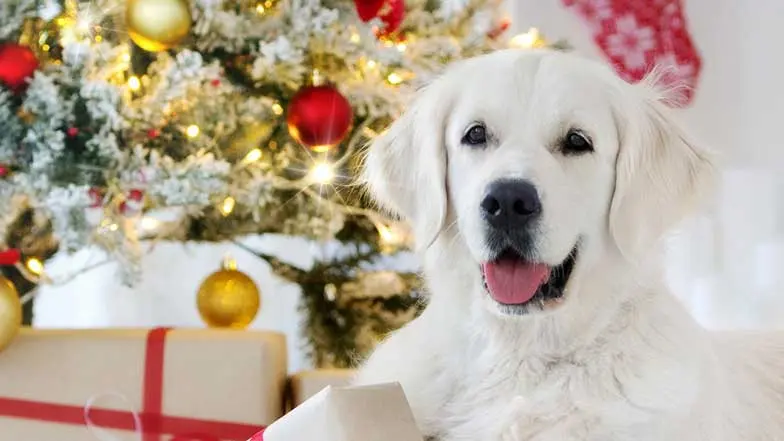
Christmas is a magical and exciting time, but the inevitable changes to your daily routines and surroundings can be overwhelming and pose unexpected dangers for your dog.
However, with a bit of planning and by following our top tips, you can keep your dog safe and happy, so everyone can enjoy the festive period.
It's best to continue to feed your dog their usual diet during the Christmas period, but if you would like to treat your dog, raw carrots are a healthy choice.
Interactive feeders are also a great idea as they mentally stimulate your dog and help to burn excess energy whilst putting their natural foraging instincts to work. There are many different types of feeders available, but many encourage licking to empty them of food or treats which is a great decompression activity for hyper or anxious dogs – perfect if things get hectic at Christmas.
Christmas is the season of eating, drinking, and celebrating! However, many of the tasty treats we indulge in at this time of year, particularly the traditional Christmas dinner, can be poisonous to dogs or make them very unwell. Festive foods that are off the menu for your dog include:
Sweets and chocolate are often given as presents so it's important to check if festive parcels contain edible items before putting them under the tree.
Some seasonal plants and foliage present a risk to our canine companions. Pine (real Christmas trees), Mistletoe, Poinsettia and Holly are all toxic to dogs, so think about falling leaves or berries when decorating with your fresh foliage.
If your dog eats something toxic (or you suspect they have), you should call your vet immediately, ideally with details of what, when and how much they consumed. Time is an important factor so the sooner you get professional help the better the prognosis for your dog.
Symptoms to look out for include:
Treatment for poisoning usually involves your vet administering an ‘emetic’ to make your dog sick, followed by activated charcoal to absorb any remaining toxins. In severe cases, your dog may need to spend the night at the vet on a drip to flush the system of any remaining toxins.
Loading video...
Some Christmas decorations and presents can also pose a choking risk for dogs, particularly those with small pieces, or that roll, dangle, or move.
Keep an eye on your dog when presents are being unwrapped and avoid leaving your dog unattended with wrapping paper or the Christmas tree. Remove all rubbish and packaging from the floor and keep small toys away from your dog.
Tinsel, glass baubles and other edible chocolate tree decorations are often overlooked dangers, so it's best to keep these out of your dog's reach. Tree lights are also a great temptation and present a choking hazard, as well as the added danger of electric shocks should your dog chew the wires.
If your dog does get something stuck in their throat, contact your emergency vet for help immediately. Even if you manage to remove the blockage, we recommend that your dog is checked by your vet after any choking incident.
It's important that your dog has a safe place to go to where they can distance themselves from the festivities whilst you're having fun! Their safe place needs to be in a separate room and away from the noise, other pets and children. A baby gate can be very useful to pop up around the house if you need to keep your dog separate from guests or children, without shutting doors.
If you're visiting friends or relatives, take your dog’s belongings, such as a bed, bowl or toy, with you and create a safe place in their home where your dog can feel secure and relaxed.
Read about creating a safe space for your dog during firework festivities.
Inevitably, everyday routines tend to be disrupted during the festive season. However, dogs still need consistency and can be overwhelmed by too much change.
If you notice your dog displaying any of the following signs, they might be feeling overwhelmed and should be moved to their safe place:
To help keep your dog calm and relaxed over Christmas, follow these simple suggestions:

If temperatures drop at Christmas time, ensure your dog’s safe space is warm and in a draught-free area. This is particularly important if you leave them at home in the cold weather whilst visiting friends and family.
Likewise, if you're spending more time at home and the central heating is making the house cosier than usual, ensure it isn’t too hot for your dog. This is key if your dog is already unsettled by lots of guests or unusual activity.
If your dog is panting or pacing, check the temperature in the house. Move them to a cooler area and make certain that they always have a bowl of fresh cold water nearby.
Christmas is a wonderful time of year and as long as you're aware of the potential dangers, it can be a very happy time for you and your dog.
Should you have any concerns about your guide dog’s health during the festive period, please contact Guide Line at 0800 781 1444 - we’re here to help. Please contact the emergency line on 0345 143 0217 if anything happens out of office hours.