Considerations when flying with your guide dog
We ask all our owners to take into consideration that there is no provision of veterinary care available to their dogs during air travel and therefore they must be aware of the risks to their dog's health and welfare should a medical emergency occur mid-flight.
Welfare of your Guide Dog
Be aware that although flying can be very exciting for people, it can be very scary and stressful for dogs, even more so if the owner is also fearful of flying. Take off, landing and turbulence can be frightening for dogs. We recommend you read our welfare considerations page relating to travel before booking any air travel with your dog.
Visiting the vets
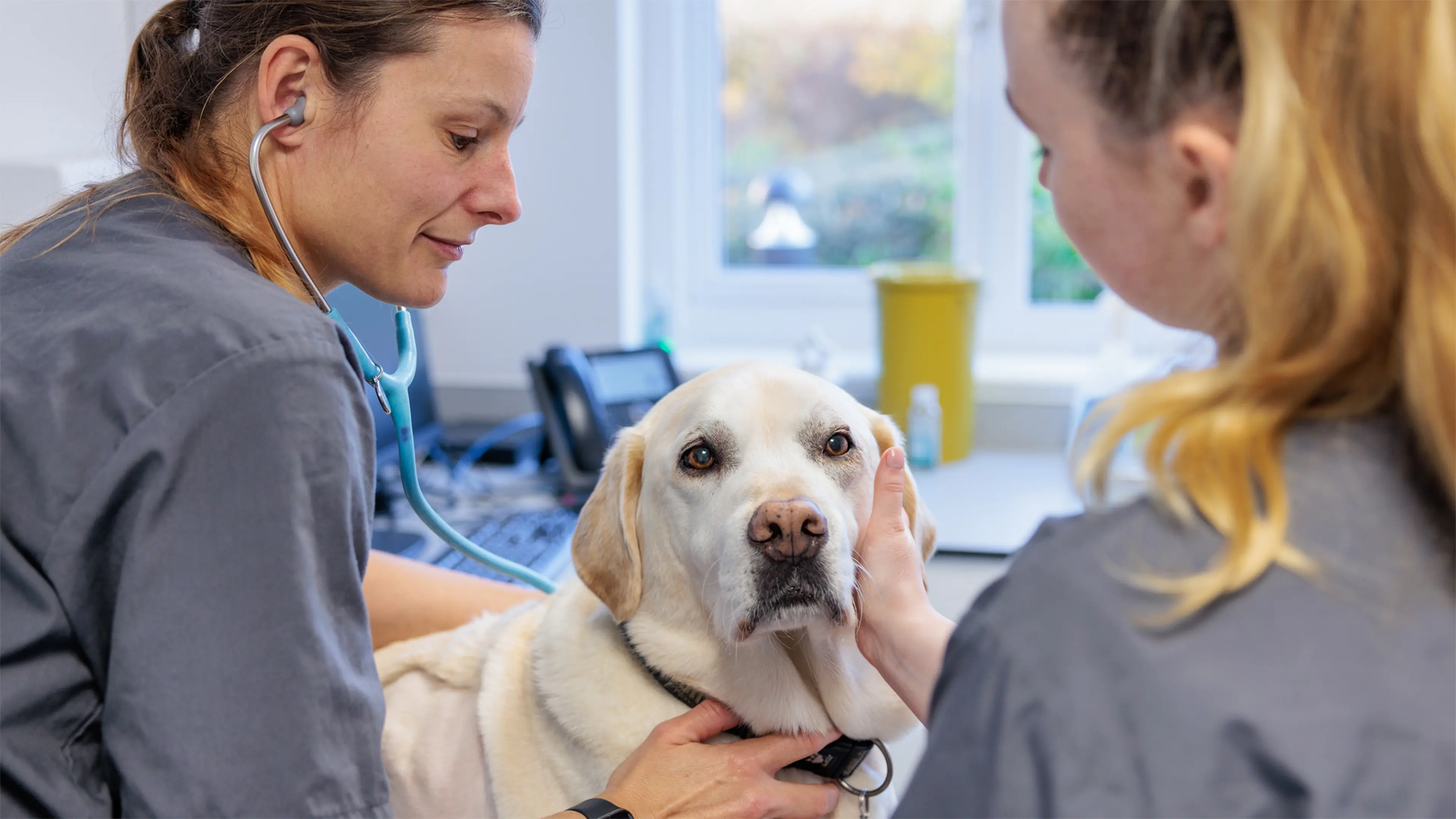
If you are undertaking air travel with your guide dog, you must ensure you have seen your vet prior to travel to ensure your dog has had a health check carried out, that their vaccinations are up to date, and to ensure you have all the relevant documentation required
Water availability
Planning for the provision of water for your dog during the flight must be considered. Unfortunately, this is restricted through airport security (please check before travel what you are permitted to take through security), however, water can be bought in the departure area of the airport or on the aircraft and may be provided free of charge by aircraft cabin staff.
Ice cubes are not a suitable alternative to water. If you are looking to undertake long-haul flights with your dog, on journeys over three hours, you must consider the additional provisions required for your dog, details of which are outlined in the welfare considerations page.
Processing Procedures
You will need to check with your airline or booking agent about the procedures for processing your dog at your destination airport, on entry to that country or prior to your return journey to the UK, as these may be different to the UK in terms of processes and the paperwork required.
Please be aware that Guide Dogs does not permit our dogs to travel to any country where the dog must be housed in an external quarantine facility upon entry.
You should inform the airline, tour operator or booking agent booking the flight that you intend to fly with a guide or assistance dog. This should ideally be done at least two weeks (minimum 48 hours) before flying, although every reasonable effort should be made by the airline to accommodate a guide or assistance dog if less notice is unavoidable.
It is also advisable that you contact the airport and airline you are flying with directly, even if booked through a third party, to ensure that everything is put in place to support you and your guide or assistance dog on the day of travel.
Documentation – IGDR, ADI & Dog ID Books
Airlines are entitled to ask for evidence that a guide or assistance dog is trained by, what is known as, a recognised training organisation. A list of qualifying training organisations can be found on the International Guide Dogs Federation (IGDF) or Assistance Dogs International (ADI) websites.
Airlines may accept your Guide Dogs or assistance dog ID book as pre-flight booking documentary evidence that your dog is trained by a recognised training organisation, with the ID tag on the dog’s collar, harness or jacket, helping to confirm the dog’s status as being trained by a recognised organisation. Documentation evidence can also be obtained by calling Guide Line on 0800 7811444 (open Monday to Friday between 9am and 5pm), or through the assistance dog organisation that trained your dog.
Arranging a PRM agent
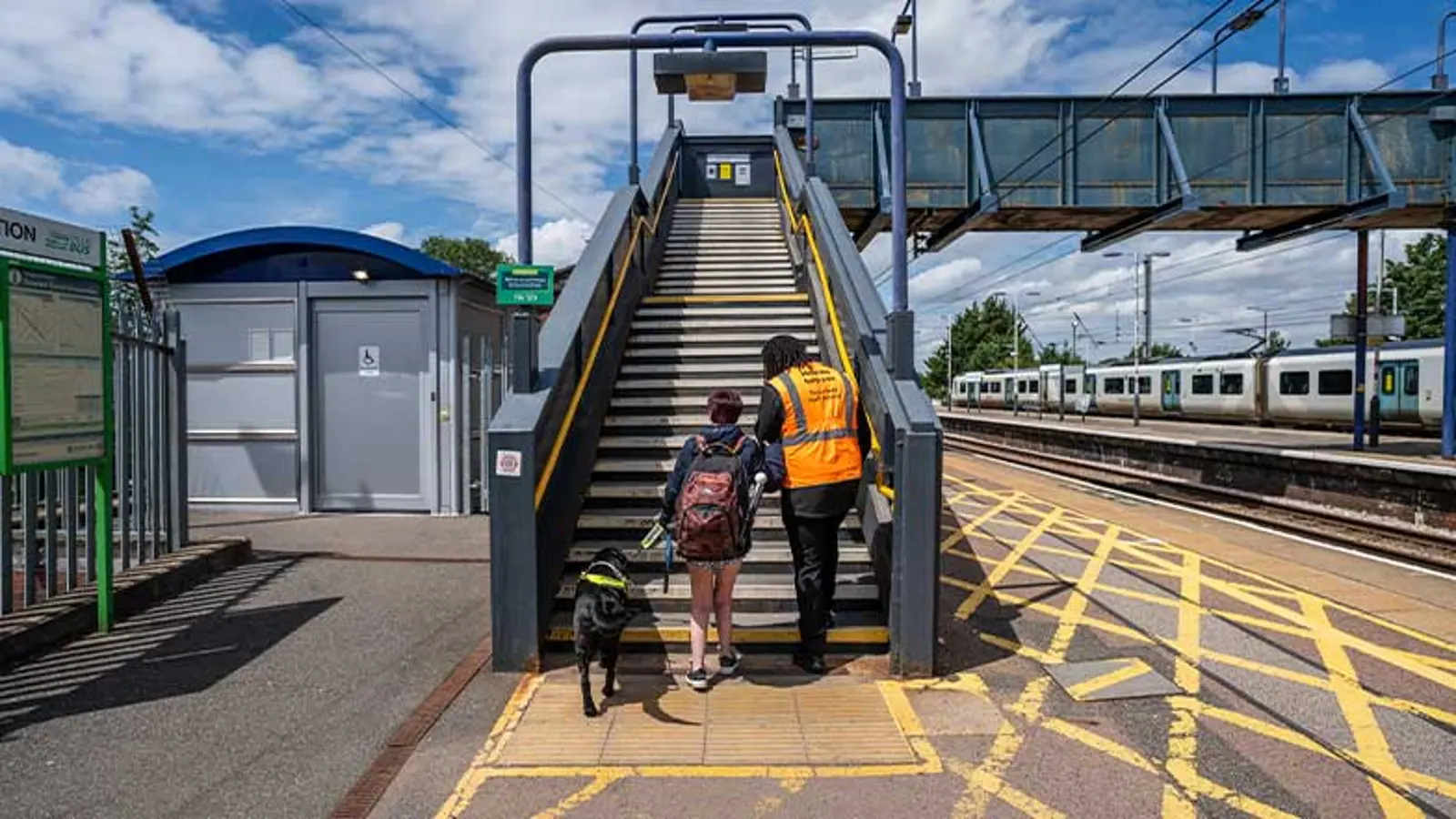
As a part of the booking process, the booking agent or airline should agree with you where the Persons with Reduced Mobility (PRM) agent is to meet you within the airport boundary, to escort you through the airport and onto the aircraft. This can be any agreed point in the airport, railway terminus, car park, taxi drop off, bus station or terminal building.
Before passing through security and departures, you should be offered the opportunity, and assisted by the PRM agent, to take your dog to relieve itself at the designated spending facility. The same agent may also run through a checklist when checking-in, to ensure that you have the appropriate PETS passport or other paperwork for your dog to leave and re-enter the country.
You should then be escorted through security, supported in departures and then escorted through to the gate and onto the aircraft. You and your dog should be boarded on the aircraft first, along with other PRM passengers, to ensure you are comfortably seated before other passengers embark.
Accommodation
Unlike pet dogs, recognised guide and assistance dogs are permitted to travel with their owners in the cabin of the aircraft with UK, European and most international air carriers, who will provide floor space in an adjoining seat or across the bulkhead, usually at no additional charge to guide and assistance dog owners. However, you should check with your airline as some will provide additional floor space at a reduced cost.
Dependent on the carrier you fly with, your dog may be provided with floor space in the seat next to you, however, some airlines will expect your dog to lay across your feet in the bulkhead row. Both scenarios are possible, so it is worth considering, based on the length of the journey, and the size of your dog, which airline offers you and your dog the best option. Dogs should be allowed to stretch their legs every two hours on a flight.
Restraining Harness
Guide Dogs has worked with Easyjet with the support of other members of the UK air industry, through their representative body Airlines UK, to produce a guide on the mandatory use of dog restraining harnesses in the cabin of an aircraft. This guide covers; What is a restraining harness? When should it be used? and the types of harness which are not appropriate as restraints when travelling by air. On returning to the UK, you will be met by a member of PRM or Animal Health staff on the aircraft or inside the terminal building, to go through PETS checks before allowing your dog to re-enter the UK. Information about the Pets Travel Scheme and what is required on return to the UK can be found on the Pet Travel Scheme (PETS) page of this website.
If requested, the PRM agent should then accompany you through Border Control, baggage reclaim and on to an agreed point in the airport boundary where you are being met or are undertaking your onward journey.