Considerations when travelling by Car with your Guide Dog
Whether you are taking a short journey to the shops or back, or you are considering travelling with your guide or assistance dog over an extended period of time, the following information has been provided to support your dog in a car journey. You should also read and familiarise yourself with the section on the welfare considerations page.
Securing your Guide Dog
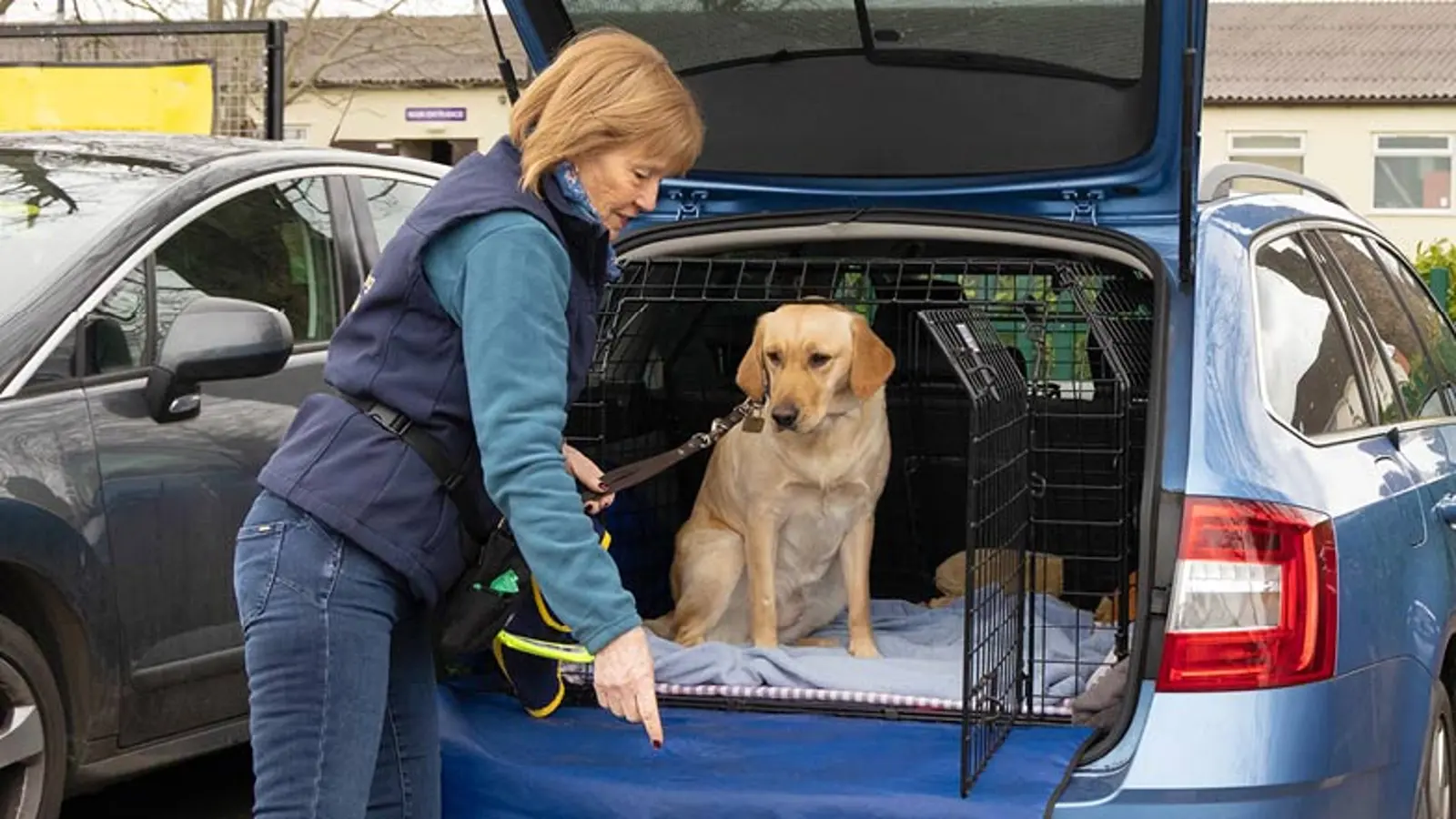
Dogs should be safely secured in the boot of the car in an estate or hatchback vehicle, ideally behind a secure dog guard. If you do not have a dog guard, adult dogs can be secured using a body harness and tether attached to a suitable anchor point in the boot – the tether must be of sufficient length to ensure the dog can lie down comfortably with room to turn around but short enough to prevent the dog either entering the seating area or being able to jump out of the car when the boot is open.
If these options aren't available to you, dog should sit on the back seat passenger side of the car, wearing a correctly fitted car harness secured to the seatbelt. Make sure your dog is wearing a collar with an ID tag.
As a last resort, if your dog has to travel with you in the front foot well of a vehicle, do not disengage the passenger airbag and ensure the dog is lying down at all times and is not distracting the driver. It is advisable and preferable to move the front passenger seat forward and place your dog in the foot well behind it, supervised by a person sat in the rear of the vehicle.
Due to the limited space available in a foot well, and the potential impact on the dog's comfort and welfare, dogs must not be transported in the foot well of a vehicle for journeys lasting more than 15 minutes.
Ventilation
Make sure the vehicle being travelled in has adequate ventilation for your dog and ensure the temperature inside the vehicle is comfortable. You should avoid leaving your dog alone in any vehicle for longer than 15 minutes and never in warm or hot weather - the temperature in a car, even with windows open, can rise dangerously quickly and be fatal for dogs.
If you cannot take your dog out with you and the weather is suitable, ensure that the tailgate is locked open and/or several windows are left slightly open. There are products on the market that can be bought from pet shops or car maintenance retailers, which can lock a tailgate slightly open on an estate or hatchback vehicle, or can protect an open window from intruders.
Air Conditioning
If possible, use a vehicle that is equipped with air conditioning. Additional features including tinted windows or window shades in the rear portion of the vehicle or a UV coating or film on the back windows can help block out sunlight and keep the car cooler, providing extra comfort for passengers and your dog.
Detachable roofs or soft tops
You should not travel with your dog in a vehicle where a detachable roof has been removed or where the soft top is down and do not allow them to hang out of a car window.
Frequent rest stops
When travelling on an extended journey, make sure your dog has frequent rest stops to go to the toilet, stretch its legs and have a drink at least every three hours. It is advisable to take your dog for exercise or a long walk so they are relaxed or break the journey with an extended relaxation stop. Sometimes letting the dog travel with a favourite toy or home comfort may help with relaxation.
Food & Drink
You should ensure you always have water and a drinking bowl accessible to your dog on a longer journey. Vets and pet shops usually stock a range of travel bowls for dogs, including portable bowls that fold down into a small carrying pouch, and bowls that can be filled with water and left in the car with the dog without the water spilling.
Avoid feeding your dog immediately before travelling; allow two hours between a meal and the journey starting. Remember to take a clean-up kit in case of the dog becoming ill in the back of the vehicle. Be mindful of motion sickness and avoid erratic driving and constant braking. Some dogs may require medication to travel; this must be discussed with your vet and the Dog Welfare Team if required frequently.
If you do need to feed your dog on the journey, do this in a stop-off break allowing enough time for your dog to go to spend (relieve itself) before recommencing your journey. Alternatively, leave feeding your dog until you have reached your destination. Dogs are very resilient, so will manage to cope if their regular mealtime is set back a few hours, avoiding potential sickness in the vehicle you are travelling in.