“CLANG”
At Guide Dogs, we use the acronym “CLANG” to talk about our people’s wellbeing. This is based on the 5 ways to wellbeing.
Having good relationships with family, friends and our wider communities is important for our mental wellbeing. We offer a range of online groups or in-person activities where you can connect with others.
Consider:
- Joining our Volunteering Facebook page or other social channels, such as our Facebook groups:
Sharing ideas for Guide Dogs fundraising groups
- Connecting with other local volunteers through your local fundraising group.
- Attending a volunteer social event (keep an eye out for invitations in your inbox).
- Organising your own activity, such as a Tea Party, and invite friends or your local community along.
Learning new skills can give you a sense of achievement and confidence.
Consider:
- Setting yourself a challenge you will enjoy achieving.
- Taking on new volunteering responsibilities. Speak to your volunteer manager about opportunities within your role, or find out how to take on a new or additional volunteer role.
- Visiting our Volunteer learning page to find out more about training you can access.
- Asking your volunteer manager for feedback and being open to any advice or suggestions they provide.
Regular physical activity can help improve mental wellbeing too. This isn’t about running a marathon but finding an activity that you enjoy and making it a part of your life.
Consider:
- Including more physical activity into your current volunteering role(s). For example, if it’s safe to do so, why not walk to your next volunteering activity instead of driving?
- Joining a friend on a dog walk.
- Signing up to a Guide Dogs challenge event and getting training for it – or organising your own.
Taking time to notice and enjoy the world around us can help us feel calm.
Consider:
- Noticing how volunteering makes you feel.
- Reflecting on how your volunteering makes a positive difference.
- Practising mindfulness and meditation.
- Having a ‘clear the clutter’ day.
- Taking time to reflect on the good things that have happened to you each day before going to sleep.
- Noticing when you may need to take a break and speaking to your volunteer manager.
Helping others can make us feel good; even the smallest gesture can make a big difference.
Consider:
- Learning how to confidently guide a person with sight loss by completing our sighted guide training.
- Saying ‘thank you’ to other volunteers or members of staff who make Guide Dogs a great place to volunteer.
- Nominating an outstanding volunteer or staff member for a Pat on the back.
- Visiting our How else can I help page to discover other ways you can make a difference to Guide Dogs.
- Checking in with your fellow volunteers.
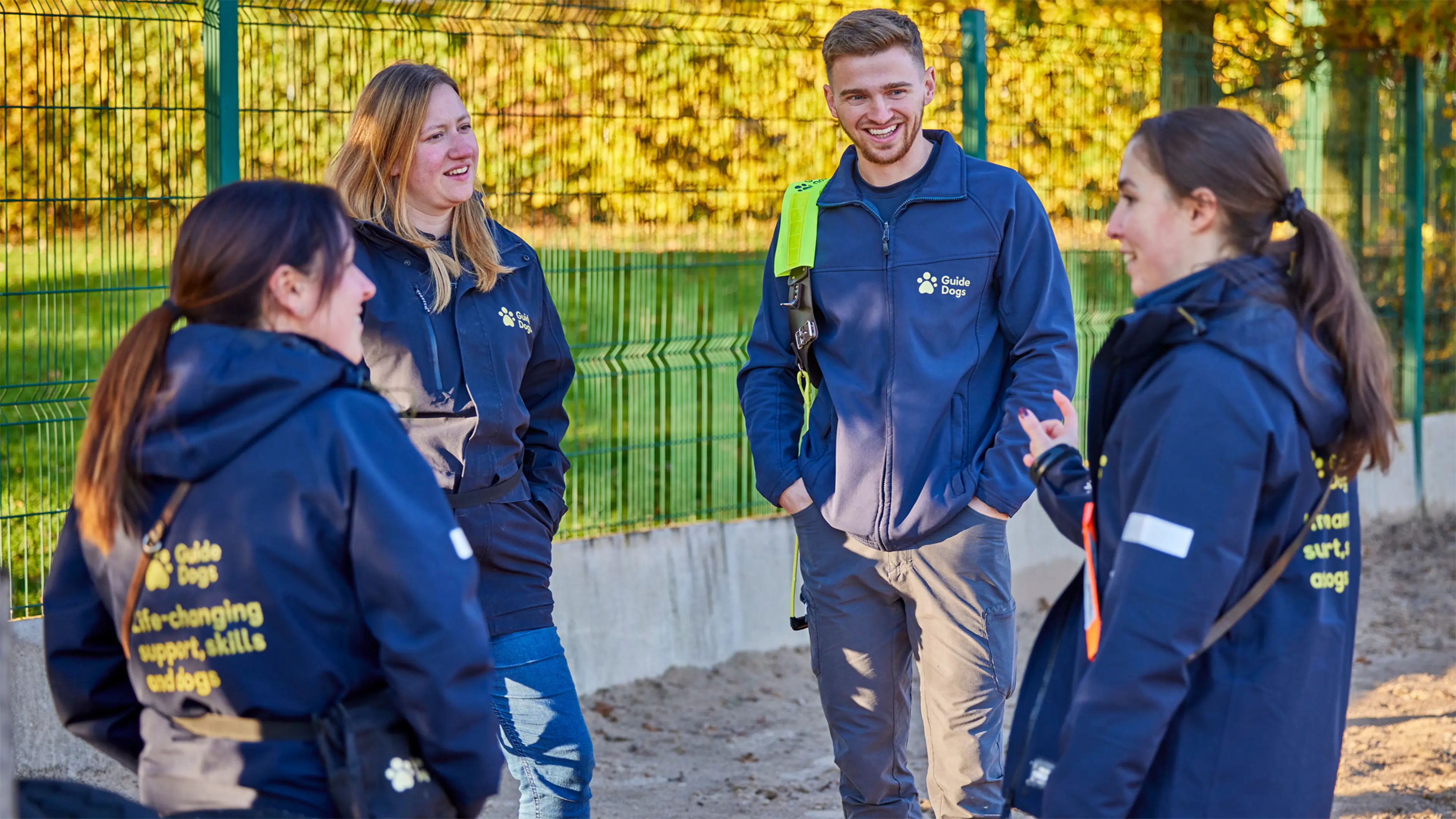
Volunteers who look after our puppies and dogs in training
When a dog moves on to a new phase of their journey – such as progressing to the next stage of training or being partnered with someone living with sight loss – it can be an emotional time for you and your household. Sadly, some volunteers may also experience the loss of a dog through bereavement. During these moments, support matters.
That’s why we have partnered with Blue Cross to ensure you have someone to turn to whenever you need it. Their Pet Loss Support Service offers confidential emotional support and guidance for anyone who has cared for one of our dogs, and your family members can access the service too.
You can contact the Blue Cross Pet Loss Support Service by:
- Telephone: 0800 096 6606 (freephone).
- Email: plsmail@bluecross.org.uk.
- Webchat: Visit the Pet Loss Support website to use the webchat function. Further information about this service is available from their website.
The telephone and webchat services are available between 8:30am and 8:30pm every day.
It’s always an emotionally difficult time when a dog you’ve cared for moves on, and not knowing what happens next can make things feel worse. That’s why we strive to provide volunteers with timely updates about the next stage of the dog’s journey. We call these ‘routine communications for volunteers in dog roles’, which provide volunteers with progress updates about our future life-changers.
Claiming reimbursement of your volunteer expenses
As a charity, we’re committed to inclusion; we’d never want anyone to worry about the financial impact of volunteering or to be out of pocket as a consequence of their activities with us. So, this is why we’re committed to reimbursing any pre-agreed reasonable expenses incurred as part of your volunteering. We’ll always encourage you to claim your expenses back. For more information and to make a claim, visit our expenses page. If you have any questions about claiming expenses, please speak with your volunteer manager.
Taking a break
Life can be busy and hectic, and we understand that there may be times when keeping up with your volunteering role may feel like you have too much to juggle. If you ever need to pause your volunteering, you don’t have to leave your role completely – simply speak with your volunteer manager, and they can arrange for you to take a break from your activities.
If you need more support
We never want volunteering to feel like a burden. If any part of your role feels challenging or you would like a little more support or training, we encourage you to reach out to your volunteer manager. They’ll be happy to be there to listen and help you feel more confident and comfortable in your role.
If someone shares a concern with you, if you’re worried about someone who may be in a vulnerable situation, or if you are at risk of harm yourself, the safeguarding team is here to help. To speak to a member of the safeguarding team, please call 0345 143 0199 or email safeguarding@guidedogs.org.uk.
Please visit the Safeguarding page for more information.
Emotional awareness and wellbeing
As a volunteer, you may encounter people who feel deeply connected to Guide Dogs for all sorts of reasons. For example, they might share the impact of sight loss on their family, the loss of a dog, or another personal experience. To make sure you feel supported and confident in these conversations, we’ve created a short course about ‘Listening with Empathy: Emotional Awareness and Wellbeing' to help you develop active listening skills, respond with empathy, and recognise the importance of looking after your own wellbeing after emotionally impactful interactions.
Wellbeing webinars
Throughout the year, we hold free online wellbeing events hosted by Luminate, which you’re welcome to attend. The webinars cover topics such as stress management, sleeping well, money and mental health, overcoming impostor syndrome, and more. When the time comes, you will receive a signup link via our all-volunteer e-newsletter, The Guide. So, please keep an eye on your inbox for invitations to these upcoming webinars.
External support
There are lots of other avenues for support available, and we’ve listed a few we think might be useful below. Please note Guide Dogs doesn’t have any affiliation with these organisations, and these links will take you to external websites.
- Mind
- Mental Health Foundation
- SANE
- The Sleep Charity
- Anxiety UK
- Samaritans
- The UK's Eating Disorder Charity - Beat
- Shout
Podcasts and videos
The videos and podcasts below contain resources and tips that may help improve your wellbeing.
- Action for happiness (YouTube channel)
- Good relationships matter for happier living. Friendly February with Vanessa King - In this five-minute video, Vanessa King, Head of Psychology at Action for Happiness, shares tips on how we can declutter our brains.
- Just one thing with Michael Mosley – if time is tight, what's the one thing that you should be doing to improve your health and wellbeing? Michael Mosley reveals scientifically proven top tips to change your life.
- Just One Thing - with Michael Mosley - Volunteer - BBC Sounds
- BBC Sounds - Mental Wellbeing - Collection