Throughout your dog’s lifetime, it’s likely they’ll encounter various health conditions and injuries. It’s important that your dog has the correct care to prevent and treat these conditions and ensure they’re healthy and happy.
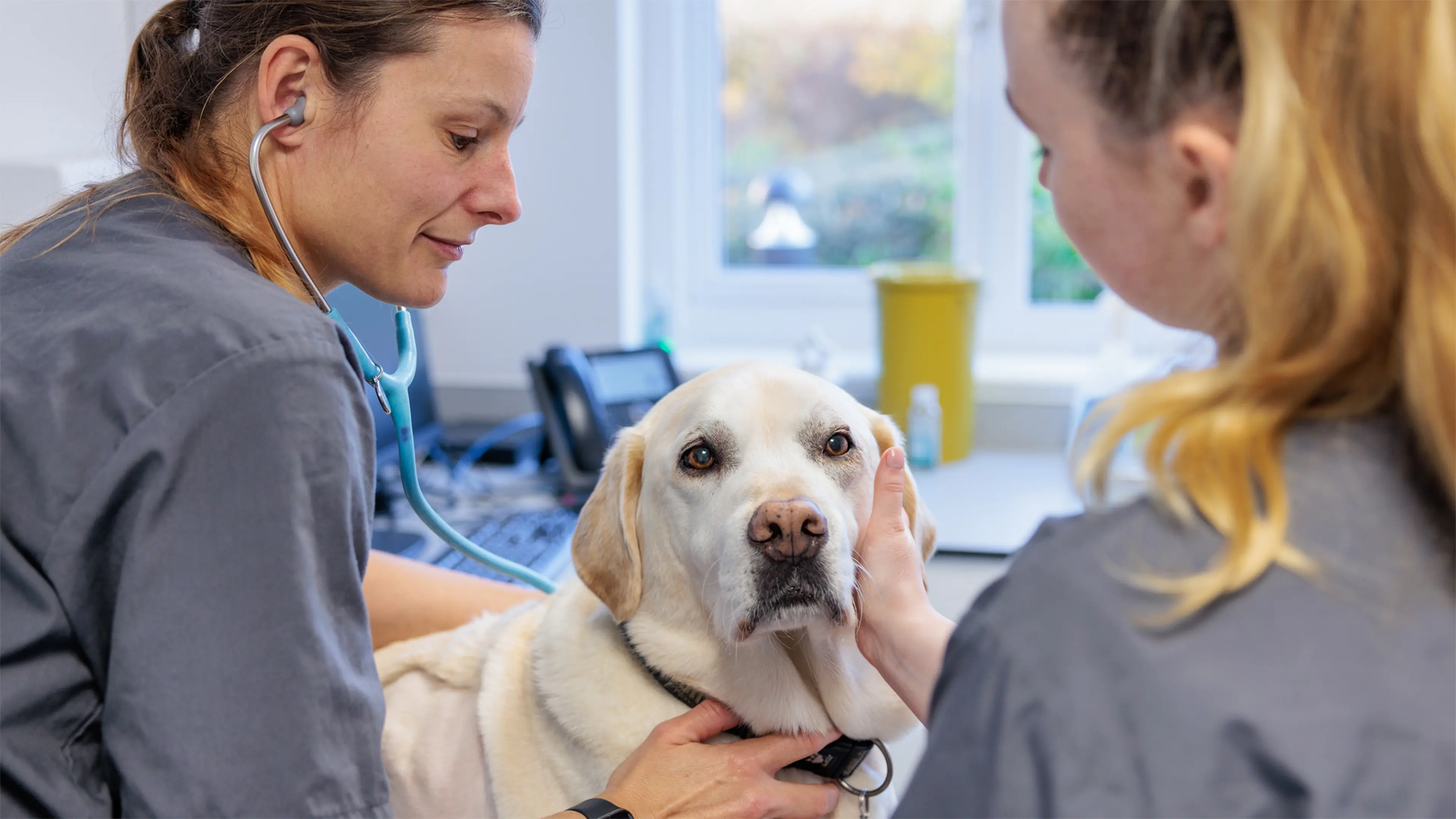
Throughout your dog’s lifetime, it’s likely they’ll encounter various health conditions and injuries. It’s important that your dog has the correct care to prevent and treat these conditions and ensure they’re healthy and happy.
Vaccination is an important part of a complete dog health care programme. It helps prevent and control the spread of infectious disease that could prove potentially fatal to your dog. Vaccines contain a weakened form of the organism that your dog needs protecting against. It works by stimulating your dog’s immune system to produce its own defence against the infection.
Some of the major infectious diseases that dogs are typically vaccinated against include:
This is an extremely infectious viral disease that typically affects younger dogs, although dogs of all ages can become infected. This disease causes the intestines of the dog to become inflamed leading to severe stomach upsets and dehydration. In very young puppies, the heart may also become inflamed. The virus is extremely hardy in the environment and can survive for many months outside of the animal.
This is another highly contagious viral disease. It produces a variety of signs but the most obvious are sneezing, coughing and an unpleasant eye and nose discharge. In more advanced stages of the disease, the virus often attacks the nervous system causing fits and paralysis. Dogs can be infected without coming into contact with an infected animal as areas used by infected dogs such as kennels and runs can harbour the virus. It may also be airborne.
This is a viral disease that is spread by direct dog-to-dog contact through saliva, urine, and faeces. Once infected, the virus targets the liver causing it to become enlarged and inflamed. The virus may also damage the eyes and kidneys. Dogs recovering from the disease may continue to harbour the virus and act as carriers, spreading the disease to other dogs by direct contact.
There are several different types of Leptospira that can affect the kidneys and liver of susceptible dogs. Leptospirosis organisms are found in ponds, streams, and rivers in the UK and are passed by direct dog-to-dog contact. One form of this disease can be transmitted to people. This is known as Weil's disease.
Neutering is the removal of the reproductive organs in dogs and is generally undertaken to stop any unwanted litters. In female dogs, the procedure is known as spaying and in male dogs, the procedure is known as castration. Our male dogs are typically castrated between 12 to 14 months of age, depending on their breed. Females are spayed after their first season, but not before 12 to 14 months of age - the exact timing of their spay will be dependent on their breed and cycle.
Some unneutered male dogs can be easily distracted by female dogs in season and may try to escape and find a mate. They may also react negatively towards other male dogs and show excessive urine marking. Similar behavioural changes can also be experienced by a female dog, who may become restless, easily distracted and attract unwanted male attention. Females may also experience pseudopregnancy, a condition which mimics pregnancy symptoms, which can be stressful for the dog and lead to behavioural changes such as nesting and resource guarding. However, neutering does not always reliably reduce these behaviours, so each dog should be treated on an individual basis, taking into account your dog’s behaviour as well as health factors.
Some other benefits of neutering dogs can include:
Fleas are small, black insects about two millimetres in length. They live in the bedding and coats of dogs, cats and other animals and feed on their blood.
Close examination of your dog may reveal these small, black insects moving quickly through your dog's coat. If there are few fleas present, only flea dirt may be visible, which will appear as small, black specks. This is actually flea faeces, which is passed through the insect after sucking blood from your dog. To confirm the presence of fleas, place some flea dirt on a wet piece of cotton wool. The dirt will turn red as the blood pigment dissolves.
Some dogs may tolerate fleas well, with only very slight scratching. Others can show a severe allergic reaction to both flea bites and flea saliva. This can result in intense scratching and chewing of neck, ears, thighs and base of the tail. Your dog may also spin around quickly to chew itself when the flea bites. In extreme cases, your dog’s skin may start to scale and discolour. Hair loss and secondary bacterial infections may also occur.
Adult fleas lay their eggs on dogs within a few days of their first blood meal. These eggs are non-sticky and will drop off onto surrounding carpets and bedding. From here, the eggs will hatch to produce larvae that feed on flea faeces and organic matter found in the environment. The larvae dislike light and will tend to live deep in the carpets and in soil.
After a period of growth, the larvae will pupate. This is when the larvae take on the form of the adult. The adult flea will be stimulated to emerge from the pupa by warmth of body heat, vibrations such as dogs walking by or by exhaled breath (carbon dioxide). The newly emerged flea may bite humans before jumping off to find a more suitable host. Once this host is found, the life cycle will start over again.
To control fleas, you must treat all your pets on the same day. There are many treatments for your dog on the market, some function by killing fleas immediately while other preparations act when the flea bites. You must also treat your home environment -regular hoovering and cleaning of bedding will also help to destroy the flea’s different life stages.
We recommend that dogs are treated regularly according to the product manufacturer's guidelines. Make sure that you follow all product instructions carefully. Make sure the treatment is suitable for your dog as some products are particular to one kind of animal.
Ticks are small, light grey, rounded insects which feed on the blood of animals. They vary in size and when engorged, can reach the size of a pea. They can be found anywhere on your dog’s body but are most frequently found on the ears, face or abdomen where hair cover is relatively thin. Ticks will only feed at certain times in their life. Peak activity is between the months of March to June and from August to November. Most of their life cycle is spent outside in areas of long grasslands and moorland but they can also survive in cracks and crevices in the walls and floors of kennels.
Adult ticks can be seen attached to the skin of your dog and will resemble a small, smooth wart or blood blister. If your dog has only a few ticks, they may have little effect on your dog. Occasionally your dog’s skin may become irritated due to an allergic reaction to the bite. If infestations are heavy, anaemia may develop. Ticks can, however, be carriers of Lyme disease, which can be transmitted to the dog when bitten.
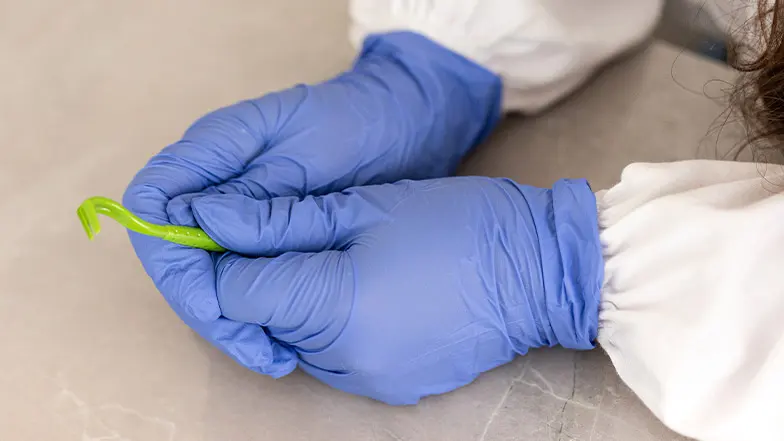
When a tick is removed from your dog’s body, it’s important that its mouthparts don’t remain embedded in your dog’s skin, or this may result in irritation, infection and abscess. To prevent this from happening, it’s always best to get your vet to demonstrate how to safely remove the tick. You can purchase tick removal tools online, or from your veterinary clinic. Spot on and oral treatments are available from your veterinary surgeon to provide protections against ticks.
Roundworms are worms that live in the guts of dogs, feeding off partially-digested food. They can be up to ten centimetres long and appear white in colour. They’re most common in puppies where they’re passed from the mother through the placenta before birth, or after birth through the milk.
Large infestations of roundworms may cause a pot-bellied appearance in puppies and, in extreme cases, may actually block the intestine and cause death. They may also experience diarrhoea and vomiting, in which roundworms may be visible. If left untreated, infestations may also cause stunted growth.
Symptoms are rarely seen in adults who don't often have major infestations of roundworms. The most accurate way of detecting roundworms is to visit your vet who will analyse a faecal sample from your dog for the presence of eggs.
Roundworms can infect people. In children in particular, roundworm larvae migrating around the body may settle in the eye and cause blindness. Proper worm control is essential to minimise the number of worms in the environment and is very important as a public health measure.
Tapeworms live in the gut of dogs and may reach up to twenty centimetres in length. The worm attaches itself to the wall of the intestines by its head, which has hooks and suckers. The worms are made up of flat segments, which are white in colour. Each segment is packed full of eggs which break off and are passed with the dog's faeces.
One of the most common ways for your dog to become infected with tapeworms is through fleas. As they grow, flea larvae will swallow tapeworm eggs and become infected. In its adult form, the flea will feed from the blood of your dog by biting it. On reaction to a bite or during grooming, your dog may lick or chew the area and swallow the flea. As the flea is digested inside your dog, the tapeworm hatches and anchors itself to the intestine of your dog.
Small numbers of tapeworms are not particularly harmful to your dog and will not usually cause illness. However, large infestations may cause weight loss and general poor health.
Infected dogs will pass the tapeworm segments through their faeces. These appear like grains of rice in the faeces and may be seen on the skin around the anus. Your dog may also show signs of anal irritation by dragging its bottom across the floor. This usually occurs as a result of the worm segments being shed. Occasionally, a worm may enter the stomach of the dog, causing irritation. This may make your dog vomit and an adult worm may be visible in the vomit.
Modern worming tablets are very effective in treating tapeworms. It’s, however, very important to control your dog’s fleas in order to prevent re-infection.

It's a legal requirement in England to ensure your dog is microchipped. Microchip identification was first introduced in the late eighties and has gradually been accepted as a safe and reliable way to identify dogs.
The microchip is contained within a special glass coating and is completely harmless. The chip will register a unique code number when a scanner is passed over it. The code number can then be referred to a central database that will identify the dog and owner.
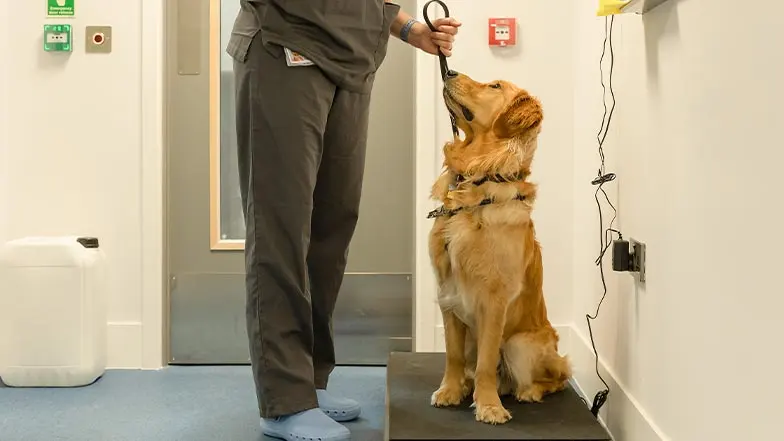
Varieties of complete diets are also available and have been formulated to suit the particular phase of your dog’s life. There are puppy foods, adult maintenance foods, and foods suitable for older dogs. Each of these has the correct balance of nutrients for that stage of your dog’s life. We suggest weighing your dog's daily food allowance to ensure they aren't being fed too little or too much - this also makes it easier to make adjustments if recommended by your vet.
Whatever food you're using, it’s important to monitor the amount your dog is given. Don’t feed titbits or human food as this may lead to health issues. We also recommend that you don’t give bones to your dog as these can cause damage to your dog's mouth and teeth and are also a choking hazard. Bones can also cause minor stomach upsets and splinters can become stuck in the digestive tract. Many dog-friendly toys are available which are safe for your dog to chew and effective at maintaining oral health.
Dogs sometimes suffer from minor eye infections or inflammation of the eye. Occasionally, tiny objects such as grit or grass seed can get into the eye and cause discomfort. Other common problems include eyelid problems, dry eyes or glaucoma. Most eye conditions will need veterinary attention. We don't recommend that you treat your dog's eye condition at home or attempt to remove foreign objects lodged in the eye yourself. This may make the condition worse and cause permanent damage.
If you think your dog has a problem with their eye, prevent them from rubbing or scratching their eye until you can see the vet. To maintain your dog's eye health, keep their eyes clean by wiping away any discharge that may accumulate at the corner of the eye with cotton wool soaked in luke-warm water. Use a separate piece of cotton wool for each eye to prevent the spread of any infection.
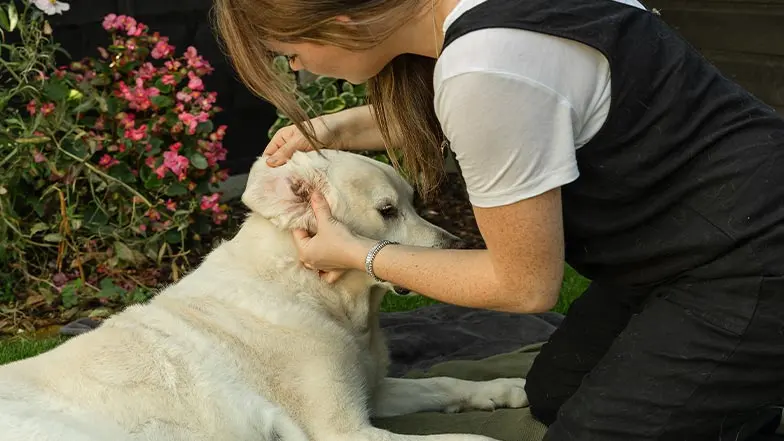
Dogs will suffer from ear problems from time to time. During the summer months, grass seeds can become a problem by becoming lodged in the ear, causing discomfort. Other common problems include ear mites and ear infections.
If you suspect that your dog has an ear problem, you should consult your vet immediately. If left untreated, your dog may cause damage to themselves by scratching. If a foreign body is visible and is easily accessible, it can be removed with your fingers. Don't insert anything into the ear (such as tweezers) as they're easily damaged. To prevent your dog from causing further injury to themselves before seeing the vet, try to stop your dog from rubbing or scratching the affected ear.
If you have any questions or concerns about your dog, you should always contact your vet for advice. For guide dog owners with general questions (non-urgent), please contact Guide Line, who will be happy to help with any queries or concerns.
Guide Dogs is committed to the highest standards of dog welfare, operating on the knowledge that the welfare of our dogs is inseparable from the wellbeing of our service users. Our staff, volunteers, and service users, undergo comprehensive training in dog care and welfare, to ensure close adherence to our key welfare principles.
We create educational and informative content to share our 90-plus years’ worth of canine expertise. This content is periodically reviewed as we continue to embrace new knowledge and scientific insights to improve how we breed, raise, train, and partner our dogs.
Whilst Guide Dogs may be able to suggest various third-party websites and third-party products when pertaining to dog care, those are not endorsed by Guide Dogs. Guide Dogs has no control over those third parties and cannot be held responsible for the accuracy of information and support they can provide or the suitability and quality of any products or services they provide.