Living with retinal detachment
Living independently with a detached retina
In the following video, Hilary shares her experience of living with detached retina.
Loading video...
In the following video, Hilary shares her experience of living with detached retina.
Loading video...
A detached retina, also referred to as retinal detachment, occurs when the retina (the layer at the back of the eye), comes away from the blood vessels supplying it with oxygen. Symptoms of a detached retina include: a sudden deterioration in your vision, new floaters (specks or lines) in your vision, seeing flashes of light, a shadow or curtain of darkness at the side or middle of your vision.
For more information on symptoms, causes, and treatments for a detached retina, head to the dedicated NHS webpage.
If you experience sight loss because of retinal detachment, there are many ways to maintain an independent lifestyle. Most people live independently with a good level of vision following retinal detachment surgery.
A detached retina causes varying levels of sight loss, so the practical support you need can differ depending on the quality of your remaining vision. For example, factors such as the level of vision in the eye that didn’t experience retinal detachment, and whether the detachment affected your peripheral vision (side vision), central vision, or both, will play a part in determining the right support for you.
Our guide to making the most of your vision is a good place to start, and you can ask your ophthalmologist about a low vision assessment (LVA). Additionally, some items and tips for helping with day-to-day activities include:
At Guide Dogs, we have a wide range of services, both with and without guide dogs, and a team of experts who can work with you to understand your needs and agree on a plan that’s right for you.
The ways we could help you:
Here’s how partnering with a guide dog helped Hilary:
I wanted more from life than just sitting on my sofa; I wanted to be out there doing something. Portia [my guide dog] has come into my life and completely changed it again, it’s wonderful.
Enquire today, so we can help to find solutions that work for you.
Depending on your overall level of vision, you might be able to register as having sight loss; your eye doctor will be able to help. Being registered as either sight impaired (previously called partially sighted) or severely sight impaired (formerly known as blind) can help you get financial support, including:
Retinal detachment is a medical emergency, so you'll probably need time off work at short notice to have treatment. It can take anywhere between two to eight weeks to recover from surgery. When you go back to work will depend on whether:
If your sight has been permanently affected by retinal detachment, talk to your employer about the impact it's had and what useful vision you do have. They're responsible for making reasonable adjustments to help you manage at work.
There's support available from the Access to Work scheme, which gives grants to employers. These cover equipment or services that you need to enable you to work, such as transport to and from work, a support worker, specialist equipment and more.
If your retinal detachment affects your sight, you shouldn't drive until an optician has checked your eyes.
After surgery, your eyesight will need to be checked by an eye doctor to ensure it meets the DVLA's minimum standard for driving. For many people, surgery can restore their sight enough to allow them to drive. However, it might take up to eight weeks for your eyes to fully recover from the surgery.
You need to tell the DVLA if:
Many people recover from treatment with a good level of vision. This is more likely the sooner a detached retina is treated. It also depends on how much of the retina was affected and whether the macula (the part of your retina that processes your central vision) was involved.
If retinal detachment has caused a permanent change to your sight, it's natural to worry about what this will mean for you. It can help to hear stories from other people who've had a detached retina. They'll be able to share their tips and reassure you that you'll still be able to do the things you enjoy in everyday life with some adjustments. Additionally, Hilary, who experienced retinal detachment, recommends accepting help from others:
Life is good now; I love the independence. The advice that I would give to others would be: if you’re offered help – take it. I struggled to come to terms with that, but I do ask now.
You can contact us to find out about services and support tailored to your individual needs.
Guide Dogs is committed to working alongside people with a range of vision impairments, who are registered as either sight-impaired or severely sight-impaired.
Our staff undergo comprehensive training in supporting individuals with vision impairment, to enable us to support you every step of the way through one of our many services, with and without dogs. We foster knowledge of living with vision impairment and create content in collaboration with our Vision Rehabilitation Specialists and Habilitation Specialists.
This content is periodically reviewed as we continue to embrace new knowledge and up-to-date information, in order to improve how we deliver our services and advice.
Please note: Whilst Guide Dogs may be able to suggest various third-party websites which may be able to assist you, those are not endorsed by Guide Dogs. Guide Dogs have no control over those third parties and cannot be held responsible for the accuracy of information and support they can provide or the suitability and quality of any products or services they provide.
_and_Morris_36.jpg?format=webp&width=3840&quality=75)
Find out how to get support for you, a family member or a friend who's experiencing vision problems.
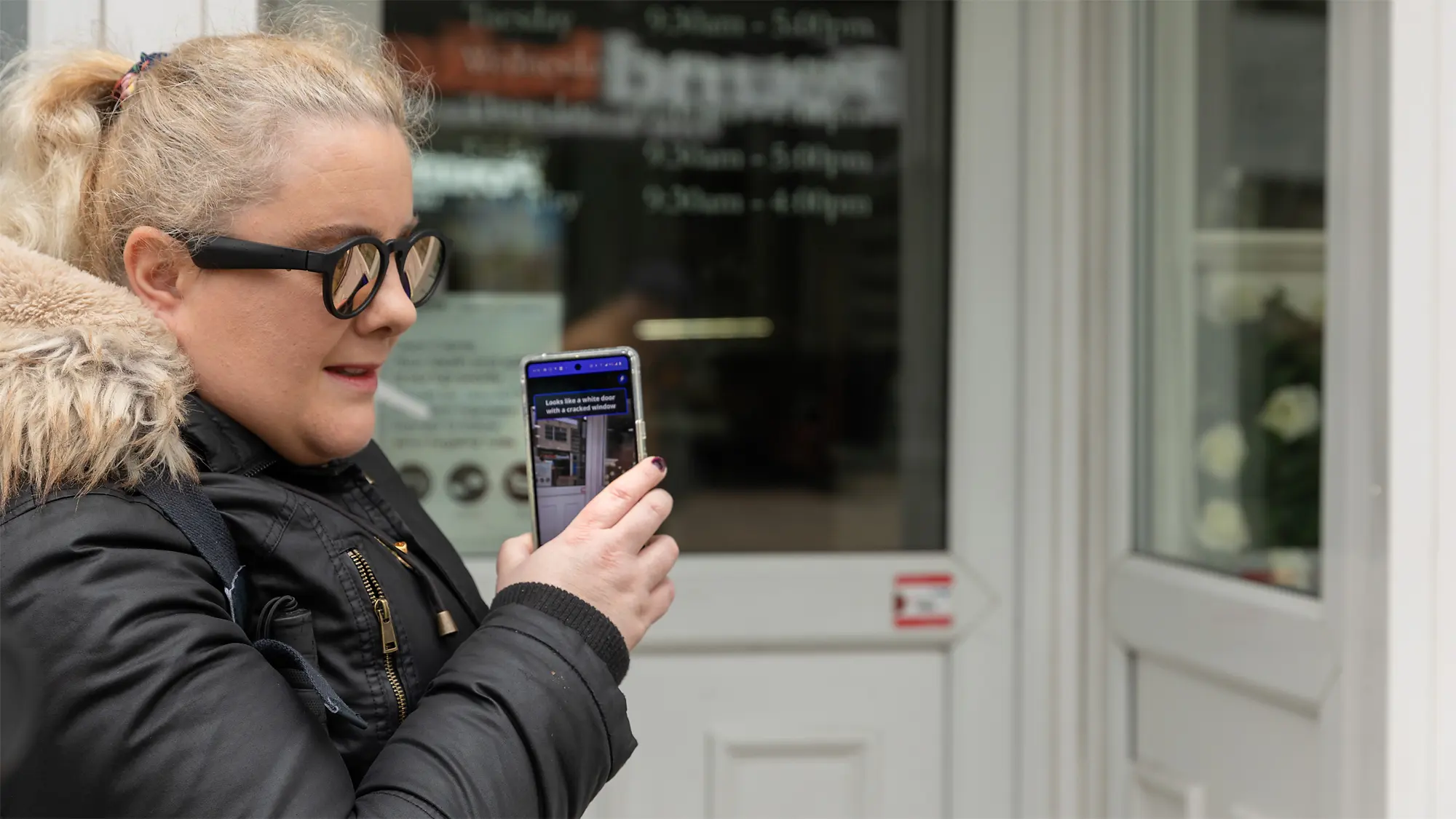
Find out how technology can help you live independently with sight loss.