With the right techniques, equipment and strategies, preparing meals with sight loss doesn't have to be daunting.
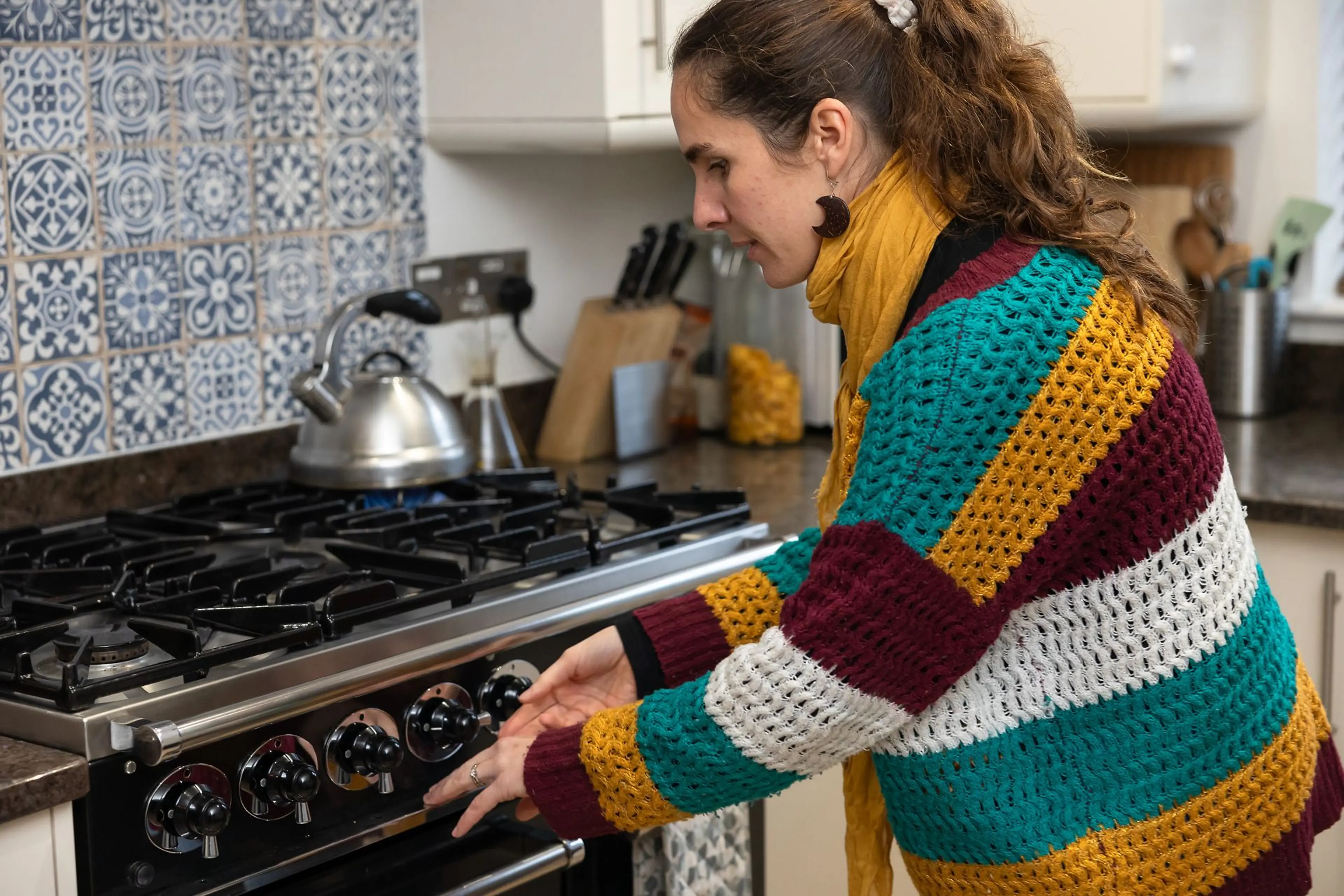
With the right techniques, equipment and strategies, preparing meals with sight loss doesn't have to be daunting.
There’s a lot you can do to make things easier when cooking a meal, and much of it has to do with preparation. Here’s how you can get yourself ready:
We’ve suggested some adaptive kitchen equipment that may help when preparing food. We've offered examples through links to other websites but they're available on other online stores too.
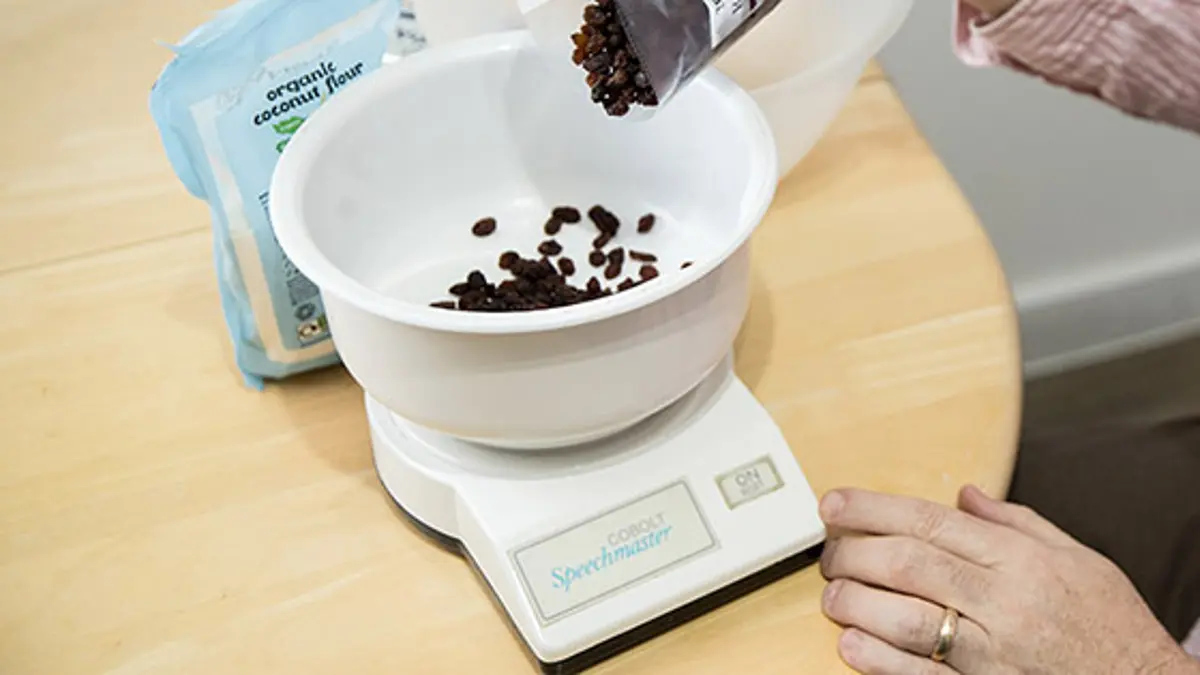
Using a talking scale helps you measure precisely by announcing the weight of your ingredients.
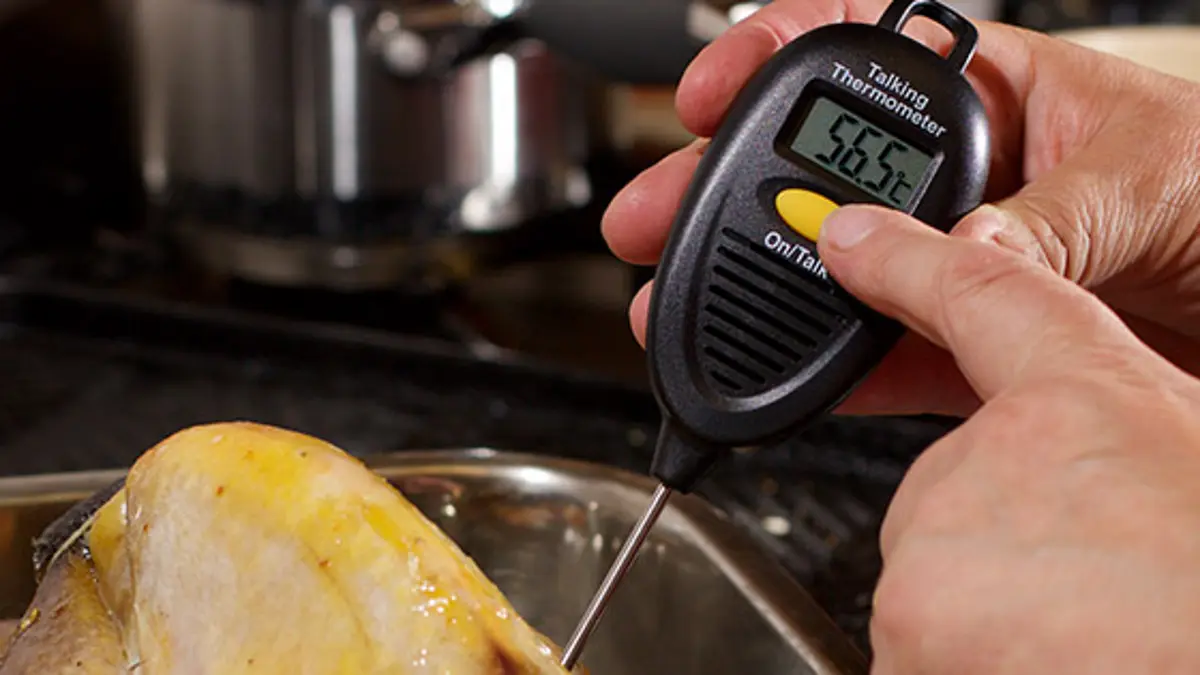
A talking food thermometer tells you the temperature of the food in either degrees Celsius or Fahrenheit using a long metal probe.
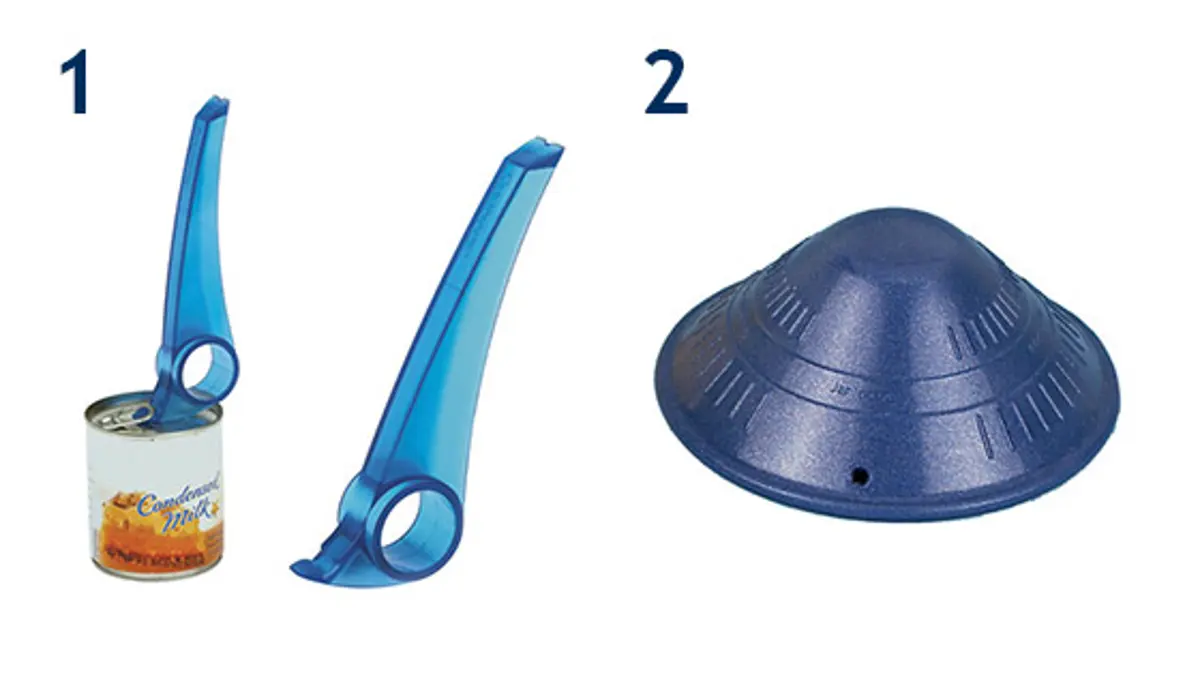
An ergonomic tin opener can make opening cans a much safer and easier task without exposing sharp edges or making a mess.
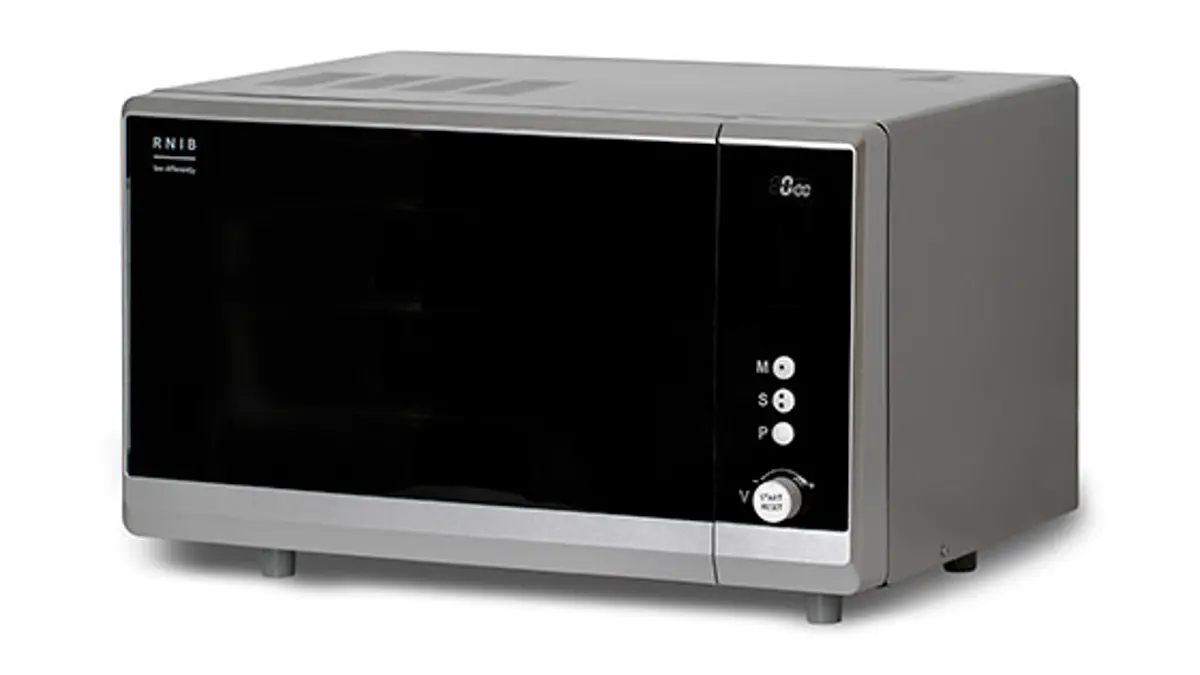
A talking microwave voices all cooking and programme information and has a tactile keypad. You can also get a talking combination microwave for a microwave, convection oven and grill, which you can use separately or in various combinations.
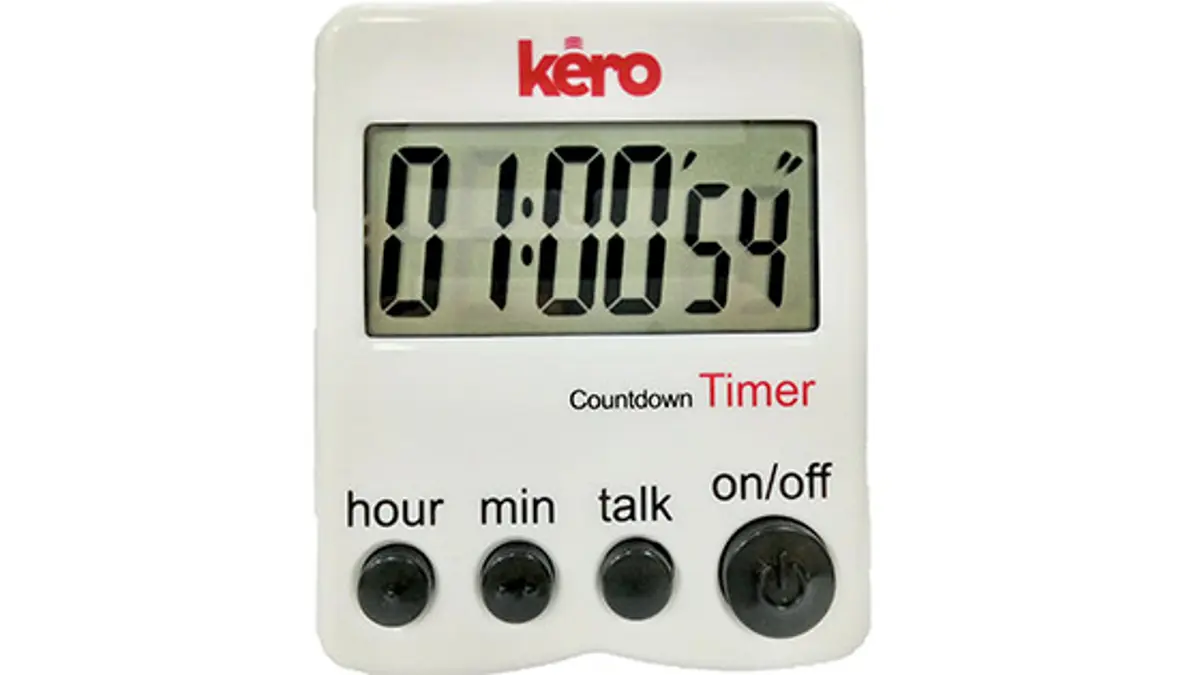
Why not try using a large print, tactile and/or talking timer. You can also use a large display clock or smart speaker to set times.
Loading video...
Before cutting and peeling vegetables (or fruit), make sure the area around you is tidy and you know where everything is that you need and you can find it easily.
Before you start, give yourself time to explore and be familiar with your knives. Identify the blade edge and make sure it’s always positioned downwards. A bump-on placed away from the sharp edge or a shaped handle can help with this. It's also a good idea to ensure your chopping board is on a non-slip surface.
To stop the food item from rolling or slipping, first use the bridge technique to cut it in half.
Hold both sides of the food item between your thumb and fingers, so that it can't roll or slip, while also keeping your fingers safely away from the knife.
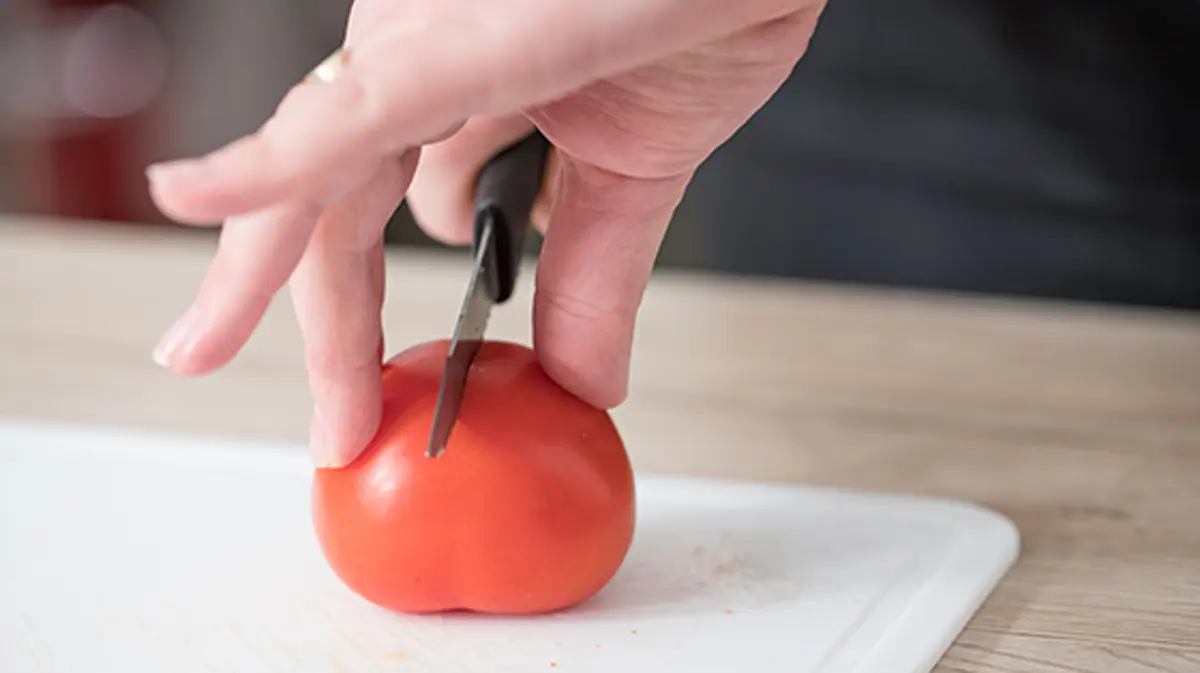
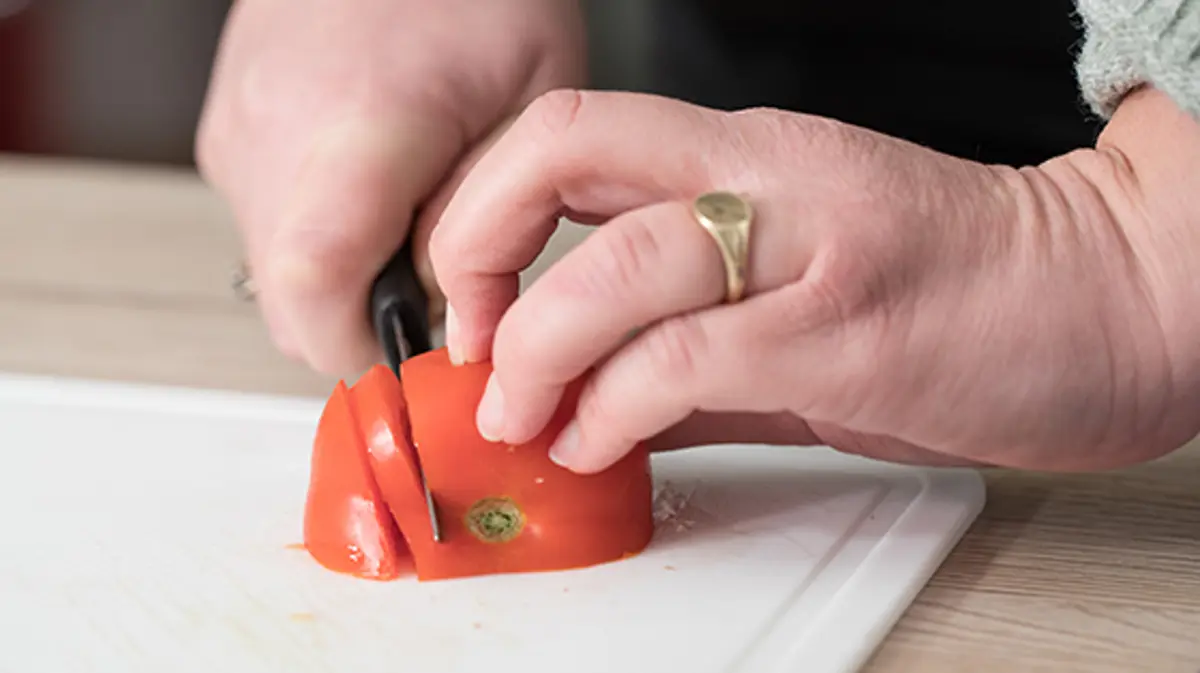
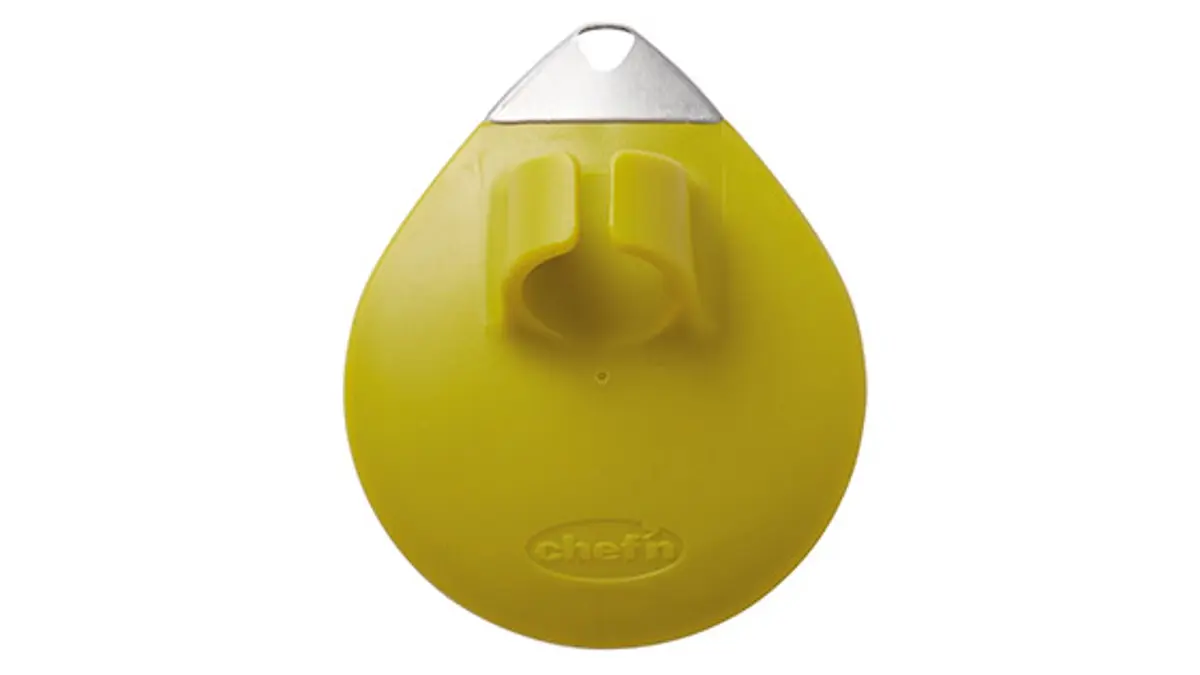
When cutting, ensure your fingertips on the hand holding the food are curled under, to avoid accidentally cutting either them or your nails. This also positions the second and third finger joints of that hand to help guide the edge of the knife blade. You can also buy finger guards that help protect your fingers as well as guide the knife.
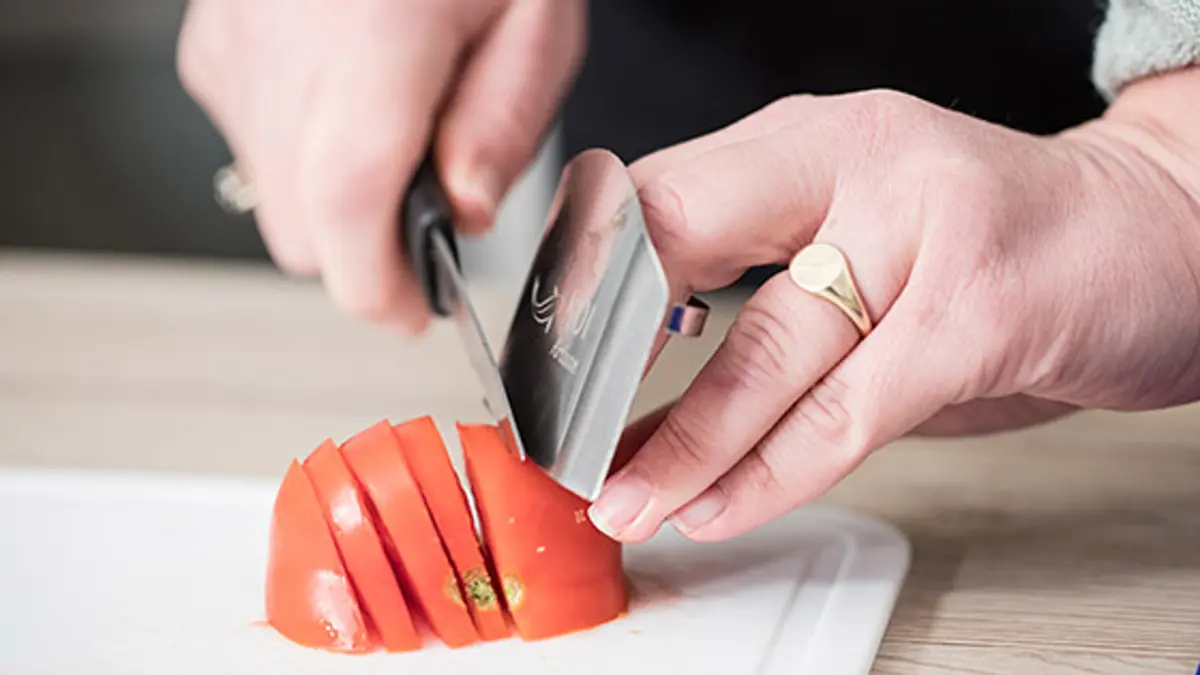
Alternatives to using knives include devices such as a plunge chopper or an apple slicer. Or you may decide that it’s easier and just as viable financially, to buy pre-cut food, for example, frozen chopped onions.
Have a bowl of water close by as dipping the potato, for example, cleans starch off the surface and makes finding any remaining peel by touch easier. And don’t worry if you leave a bit of peel on, it's good for dietary fibre!
Dycem mats are made of a non-slip material that grips on both sides and comes in a variety of sizes. The mats can be used around the house to prevent cups and plates from sliding, pens and pencils from rolling off the table, or keeping a mixing bowl steady.
Vegetable peelers with brightly coloured handles might help if you have some remaining vision, and if you want to use different peelers for different tasks then perhaps try ones with different shaped handles.
You could also try an ergonomic peeler that fits in the palm of your hand and has a rubber ring to go around your finger, so your fingers are safely away from the blade but you still have control.
Vertical or horizontal blades on peelers can feel quite different when peeling. Use what is most comfortable for you.
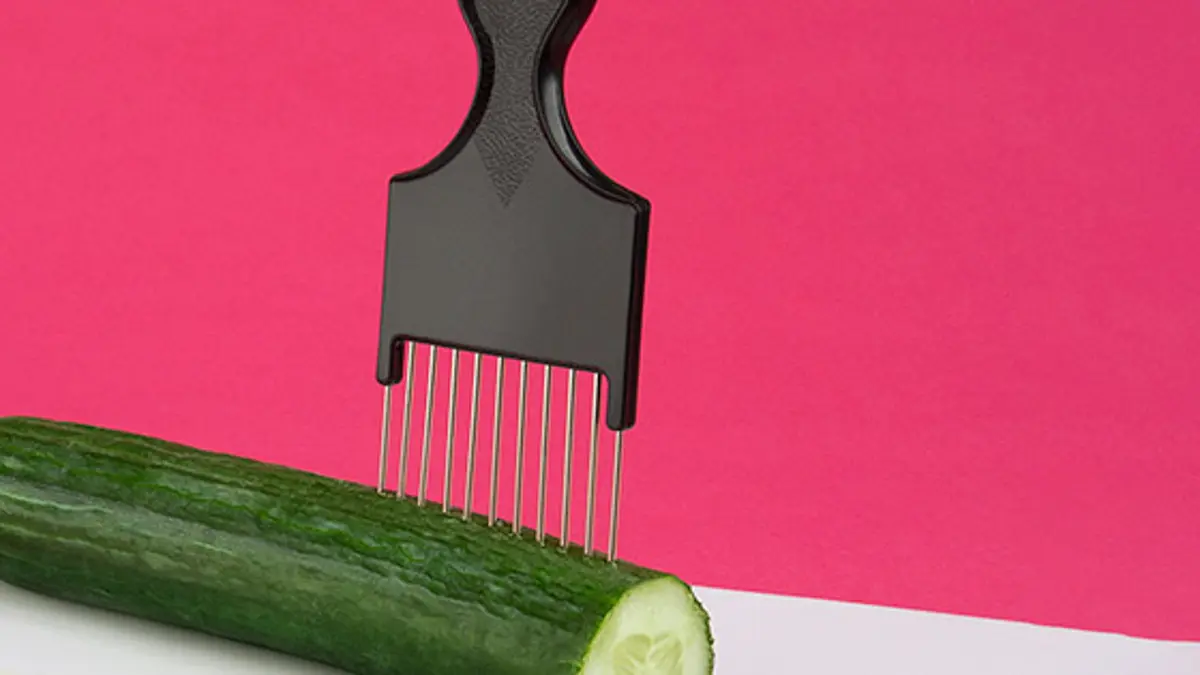
You can use a 'vegetable slicer' comb to help keep vegetables in place whilst you slice, with the teeth to guide the knife to create even slices.
Another useful tool for chopping vegetables is a vegetable cutter to help you finely chop onions, peppers, and other fruit and vegetables, safely and quickly.
Using a coloured chopping board can help to improve contrast with what you’re cutting. You can also buy boards with three raised sides to prevent food from sliding off the board and prongs to hold the food item and keep it from moving.
Folding chopping boards help you to transfer food easily without dropping any. With these boards, the flexible sides form a chute for you to guide the food down.
When cooking something in boiling water, use a small chip pan basket or metal sieve with a handle to lower the food into the saucepan. It’s then much easier to remove and drain as well.
Contact grills cook food quickly and there’s no need to turn the food, unlike with a traditional grill. They can be used to cook a surprising number of things, including oven chips and toasted sandwiches.
An electric steamer can be useful if you have limited space and if you don’t like using the hob.
One of the most useful items is a plastic saucepan as it’s got a lid (so no mess) and a handle that doesn’t get as hot as metal ones.
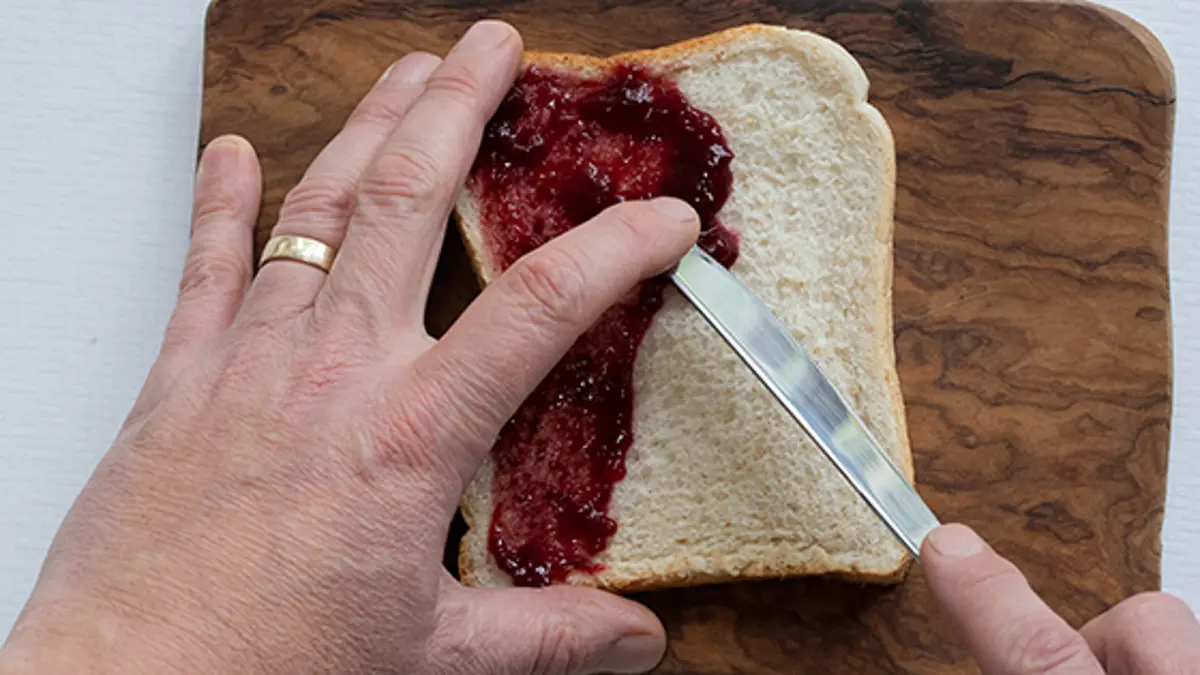
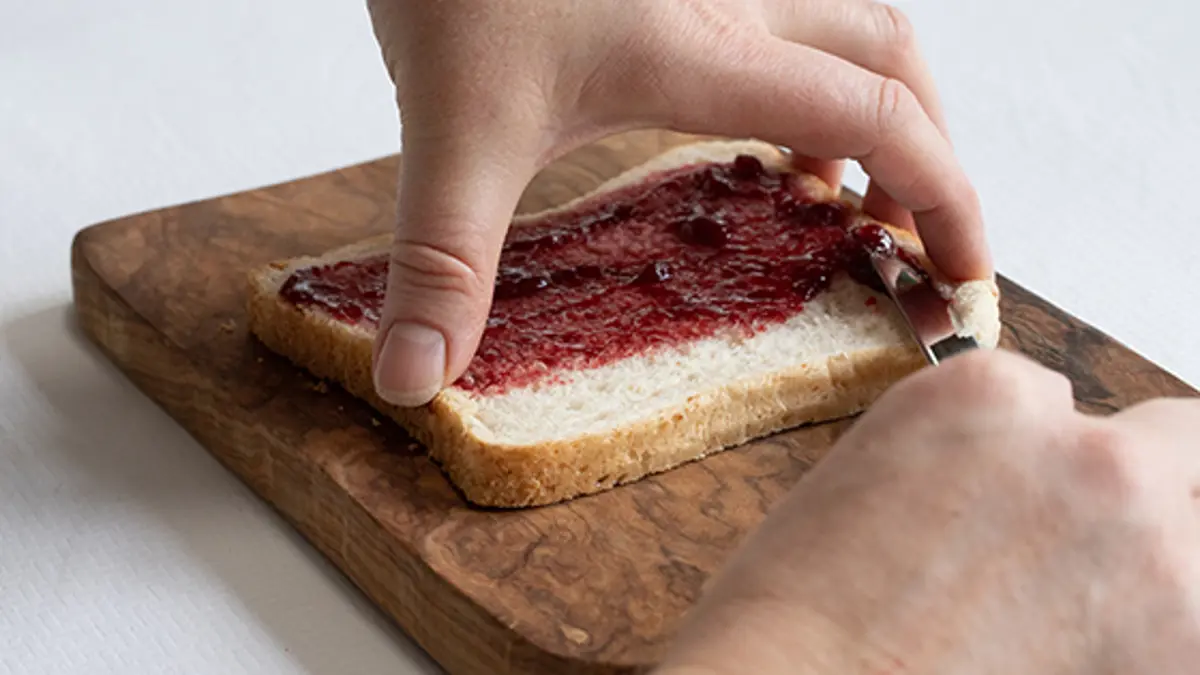
You may find it easier to use the back of a spoon rather than a knife to spread. Mastering the correct pressure to apply to the knife/spoon can be difficult – try starting with toast rather than bread as toast isn't as soft.
When you first practise getting butter, jam, etc. on a knife or spoon, try to use relatively full containers. If you have someone sighted with you, they could describe the jar or container and give verbal and/or physical guidance whilst you feel around the jar or container with the knife/spoon. Use a gentle scraping action rather than ‘digging’. If you don’t have anyone with you and you need some help, perhaps consider using apps like Be My Eyes, which connects you with a sighted volunteer, or Facetime (if you have an iPhone) to speak to someone you know.
There are two techniques you can use to enjoy a slice of bread or toast with a perfect serving of butter, jam, or whatever you prefer:
Here are some links to more information about some apps that you may find useful to help you identify things when you're preparing food.
Seeing AI is a free app that can describe the world around you, created by Microsoft specifically for Apple iOS devices.
BeSpecular is an app that uses a team of sighted volunteers to answer quick questions you might have about the world around you.