Pre-travel preparation
You should consider what situations on your journey may cause stress for you and your dog, and how you might reduce or eliminate them. You may find that it may be in your dog's best interest for them not to accompany you on your trip.
Whilst considering travelling with your dog, you should think about the following:
- Turbulence and rough seas during travel by air or water
- Lack of availability of your dog's preferred spending environment
- Provision of food and water
- The climate of your destination country and whether this is suitable for your dog
- Working your dog in an unfamiliar environment
- Working your dog in an environment less accessible than what you or your dog are used to at home
- Altering your dog’s normal routine
- Using transport your dog is unfamiliar with
- Staying in accommodation different from your home environment
- Your expectations of your dog in an unfamiliar environment
Before leaving the UK, you should plan all stages of the journey, including your return to the UK. There are a number of rules and regulations that you and your dog will have to comply with including:
- An Animal Health Certificate or Pet Passport and other mandatory dog health requirements
- Documentation to satisfy your transport provider that you are travelling with a recognised guide or assistance dog
- Routes where your dog is permitted to travel
- Transport you are permitted to use with your dog
- Places on transport where your dog is permitted to be with you
- The rules related to accommodation and dogs in the country you are visiting
- The rules and regulations regarding dogs in general, and more specifically, assistance dogs in the country you are visiting
- Your rights as a disabled person in the country you are visiting
- Your access to veterinary support during your journey and especially prior to your return to the UK
- Access to food for your dog
- Contingencies for disrupted plans and alternative routes
Grooming
You should ensure that your dog is well groomed before and during your travels, to reduce your dog’s coat shedding as they will be in close proximity to other passengers.
Food & Water
Consider when, where and how you plan to feed your dog prior to travel, and on the journey. You may be restricted as to when you should or can feed your dog, dependent upon the type of transport you are taking and the length of travel, (a dog's total digestive process is more rapid than in humans).
- You are advised to give your dog a small feed at least two hours prior to travel
- If your dog is taking a long-haul flight, food can be withheld for up to 12 hours if necessary
- Avoid giving your dog salty snacks, which will increase your dog’s thirst
You should be aware that products containing meat and meat-based dog food/treats may not be taken into the country you are visiting or taken back to the UK on your return.
You must not restrict access to water for your dog at any time; however, you may want to think about the amount of water your dog has access to and how you provide it.
You also need to be aware that you may be limited or restricted in taking water through security checks, so may have to purchase water in the departure area of a port or once you are on your mode of transport.
Toilet breaks
You must give your dog an opportunity to relieve itself several times on its preferred surface prior to entering any secured area if travelling by air, sea or international rail. You should be aware that usually, once at the airport/port/station, your dog will only have access to concrete relief areas and will have to relieve itself while on the lead.
If you are travelling by road (coach/car) offer your dog the chance to relieve itself at each scheduled stop, or every two to three hours if possible. Most service stations have grass areas, and you should ensure you clear up after your dog and dispose of its waste correctly.
If you are travelling by rail, try to establish appropriate places to relieve your dog prior to travel and where changes between trains occur, you may want to factor your journey to include a suitable break between rail journeys.
Equipment for your Guide Dog
You should consider carrying equipment for your dog, including:
- Plastic bags, absorbent granules and cleaning wipes just in case your dog has an accident or becomes ill on your journey
- Bottled water (where possible), a resealable water container, appropriate snacks for long journeys and a portable food bowl
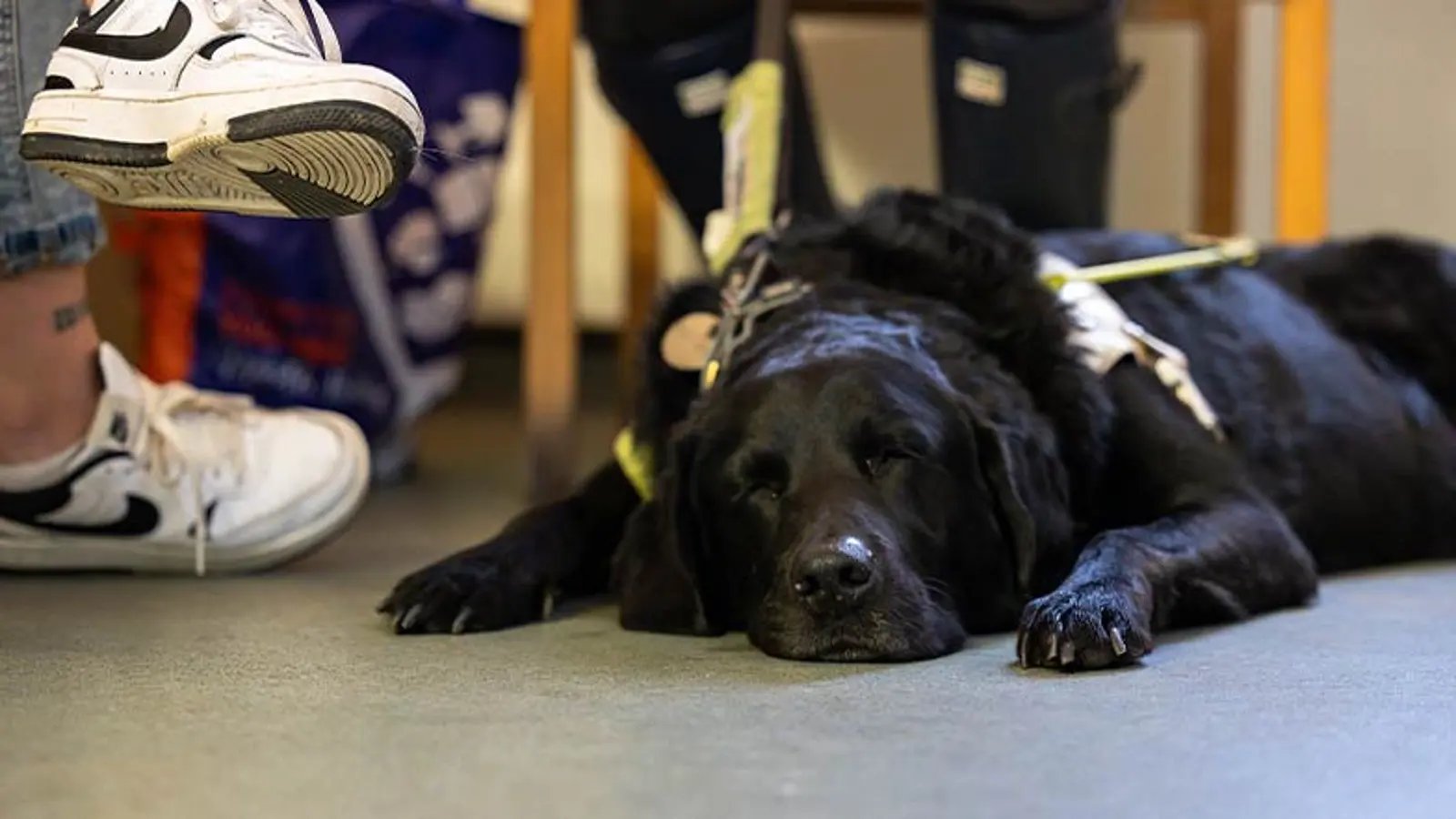
- A fleece/vet bed which smells familiar to your dog, for them to lie on during your journey, and at your place of residence while away
- On longer or more stressful journeys, you could consider placing incontinence pads under your dog’s fleece to help with accidents if they occur.
In some situations, like long haul flights, the airline may insist on you providing a dog fleece and incontinence pad as a prerequisite of you flying with your dog.
Establishing New Regimes
When you have arrived at your destination, you should consider establishing new feeding and spending regimes for your dog, especially if you have travelled to a different time zone or are planning activities that will impact on their normal routine.
Disease Prevention
It is vitally important that you observe guidelines for disease prevention specifically for the country or continent you are visiting. Much of the regulation in place for dogs is to control issues for public health, however it is just as important to consider your dog’s wellbeing when travelling. Many countries have diseases not found in the UK or Europe.
It is also important to note that Guide Dogs does not permit travel of our dogs to countries where the guide dog must be quarantined in an external facility.