Guide Dogs’ ambition is a future where every person with sight loss can live the life they choose.
Our manifesto for the 2026 Senedd election sets out actions the next Welsh government can take to improve the lives of people with sight loss.
Parking on pavements is unsafe and unfair. 81% of people with sight loss said that reducing obstacles on pavements and street clutter was important to improving their quality of life.
Yet in Wales it is a daily occurrence because local councils don’t have the powers they need to deal with the issue. Four out of five blind and partially sighted people said that pavement parking makes it difficult to walk on the pavement at least once a week. Almost 95% of people with sight loss have been forced to walk in the road by vehicles blocking the pavement, making simple day to day journeys dangerous or potentially impossible.
Local councils in Scotland and London already have the power to act on pavement parking. Early in 2026, the UK Government announced new plans to tackle dangerous pavement parking in England. This will leave Wales as the only country in Great Britain which does not have the power to tackle dangerous pavement parking.
Vehicles parked on pavements are an obstacle I face daily, often causing anxiety and fear at having to step into the road to pass them. A change in the law would make doing everyday things like shopping, getting the bus, being a part of the community or anything else less stressful.
Clear footways with consistent features such as tactile paving are essential for people with sight loss to get out and about safely. However, our streets are becoming less accessible as local councils roll out different approaches to street design, including:
The design of the public realm is directly influenced by the Active Travel Act Guidance, the technical document for planning, designing, and delivering walking, wheeling, and cycling. This must reflect the hierarchy set out in the Highway Code which puts the safety of pedestrians first, followed by cyclists and drivers.
If you asked any passenger if they know what they will be standing on when they get off a bus, they would say a pavement. They would not expect to get off into a cycle lane.
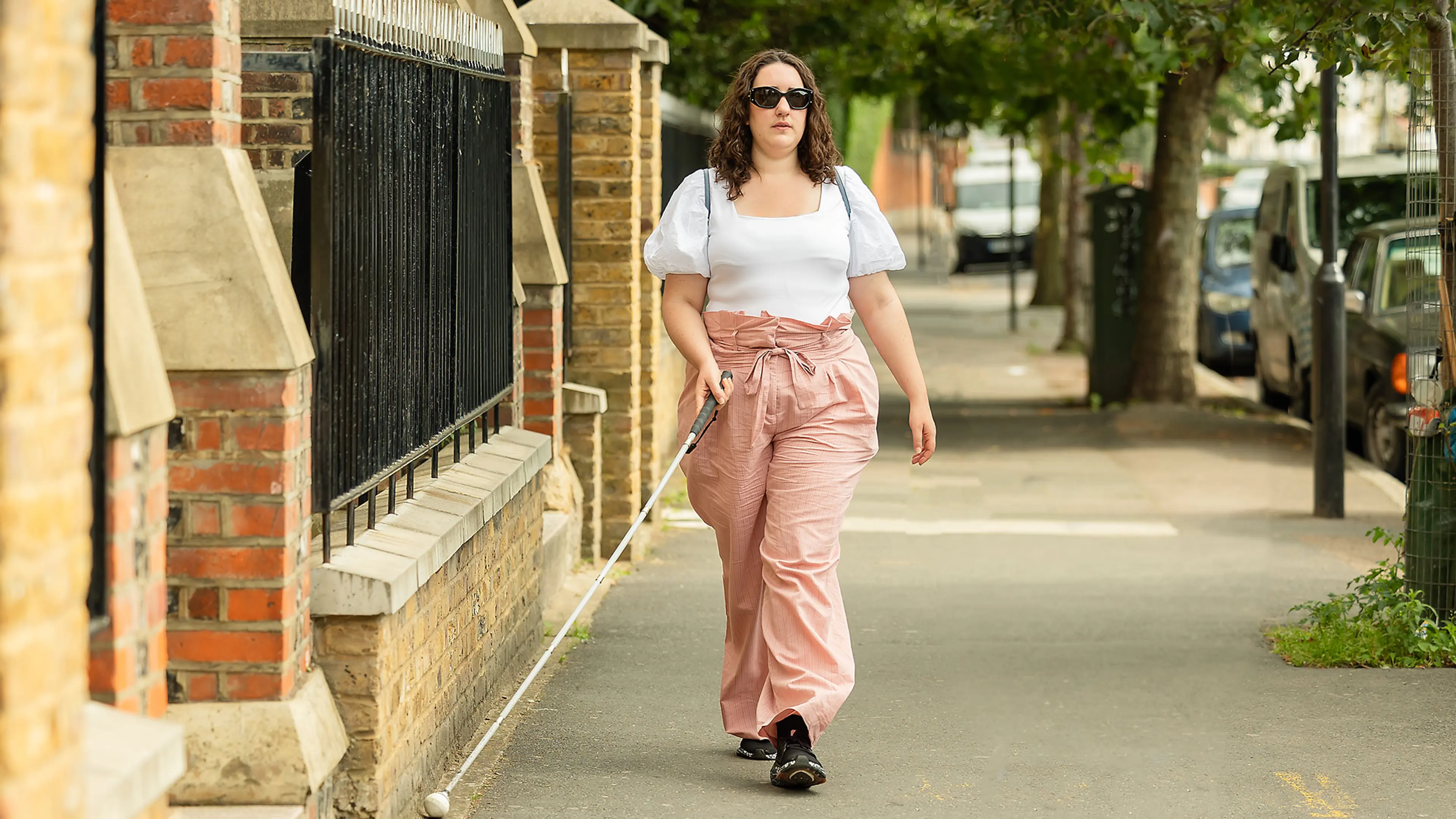
We’re campaigning to ensure public spaces are safe for people with sight loss
Our service users regularly report problems with fast, almost-silent e-scooters being ridden anti-socially on pavements, and e-bikes on footways and in pedestrian-only locations.
The Welsh Government is committed to promoting inclusive travel and improving access, reflected in five key principles to transform transport networks. These include ensuring people feel safe and welcome, improving accessibility, involving disabled people in design decisions, and embedding lasting change across all modes of transport.
Transport operators will work to new standards and practical guidance developed with disabled people, while customer-facing staff across rail, bus, and other services will undertake regular training on equality issues including disability awareness.
_and_Mayne_022.jpg?format=webp&width=3840&quality=75)
Guide dogs are not pets or accessories. Along with other types of assistance dog, guide dogs are essential for many people to live their lives independently. However, almost 90% of guide dog owners have been refused access to a business or service, such as shops or taxis. The fear of these refusals can stop people from getting out and about with confidence.
While in most cases refusing a working guide or other assistance dog is likely to be unlawful, the reality is that it is extremely difficult for guide dog owners to take action when refusals happen.
Guide Dogs Cymru welcomes the Welsh Government’s production of good practice films for drivers of taxi and private hire vehicles when offering a service to people with a vision impairment. This training will be shared with local authorities but will not be mandatory.
We’re campaigning to tackle access refusals
Children and young people with a vision impairment face a unique set of challenges in their early development and education, which puts them at a disadvantage compared to their sighted peers. Ensuring children and young people can access the high-quality specialist support they need, when they need it, is crucial to empowering them to reach their full potential and to live independently in later life.
However, an overstretched and underfunded specialist workforce means that many families face a postcode lottery in accessing support with some local authorities not employing their own habilitation specialists. Also, children and young people in Welsh medium schools, who use braille, face additional disadvantage as the specialists who teach and support them are not always fluent in reading and writing Welsh braille.
Receive updates on our campaigns and support us from home