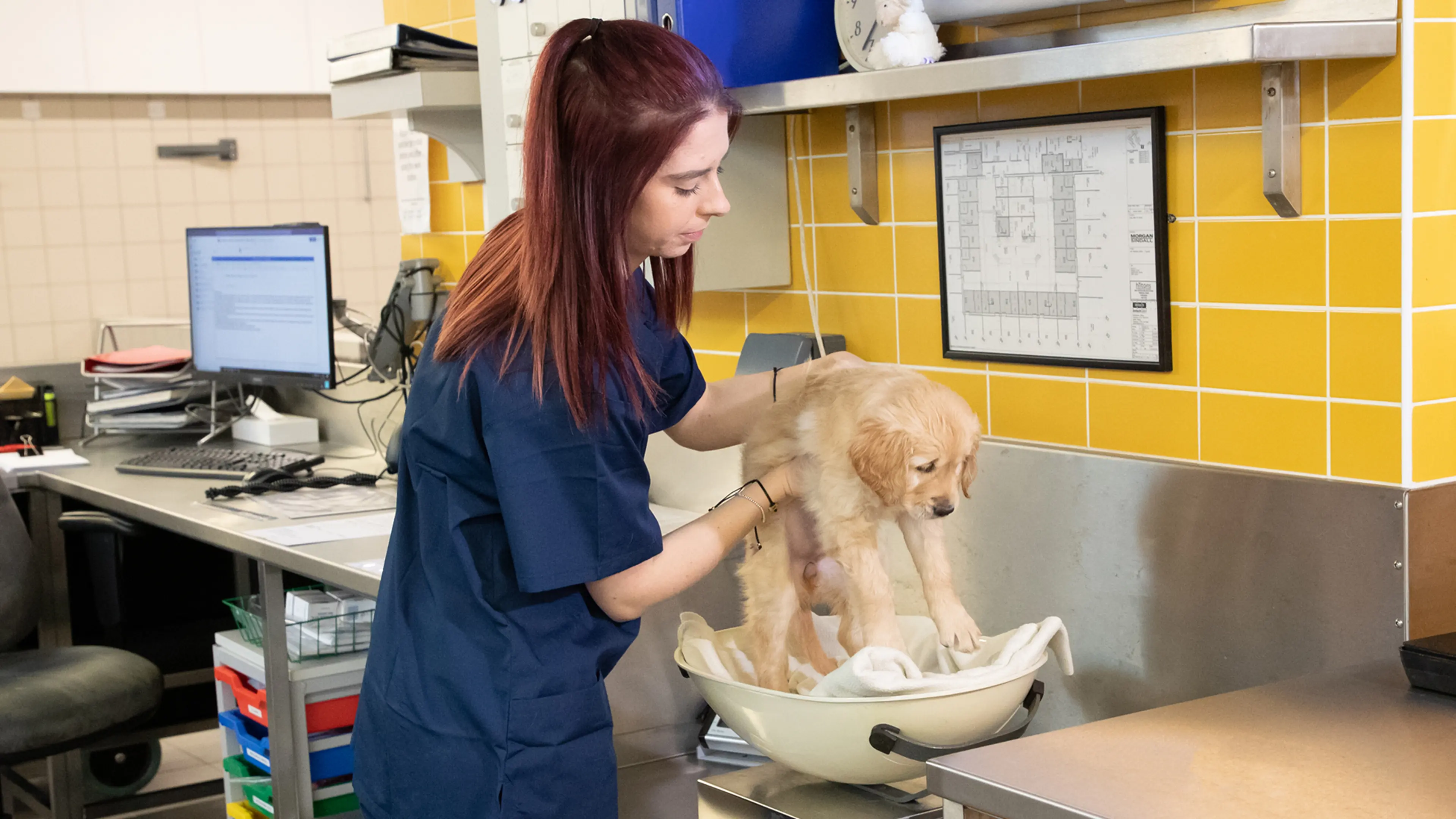
Our National Centre, in Warwickshire, is our state-of-the-art centre that is home to our world-class breeding programme. The National Centre was built in 2011 and hosts a team of experts, who help produce our life-changing guide dogs.
On average, a guide dog mum comes into season every seven months and is normally mated every other season. There are several factors for us to consider when deciding whether a guide dog mum should be mated, assuming she is in good health. Once we’ve established a guide dog mum is to be mated, extensive research is carried out to select an appropriate partner and this is married to the guide dog mum with reference to her own qualities.
Blood samples are taken from a guide dog mum due for mating to evaluate the progesterone levels, which rise at the point of ovulation, so we know she is ready for mating. While we always try to effect natural mating wherever possible, at times it is necessary to artificially inseminate. We are proud that our conception rates remain consistently high at over 95%.
Loading video...
At approximately four-to-five weeks post mating, the guide dog mum is checked for pregnancy using an ultrasound scanner and to determine the number of pups expected. The average gestation period is 63 days and our average litter size seems to be on the rise, currently at 7.6.
Loading video...
Guide Dogs are committed to following best practice in the care and welfare of all its breeding dogs.
We will always work to serve the best interests of each dog and believe that our dogs should all enjoy the care, respect and understanding that they deserve and require. We will never forget that our dogs are our partners in the work we do.
We recognise our responsibilities under the Animal Welfare Act 2006 and will keep abreast of current knowledge, always upholding the highest standards.
Guide Dogs does not require a license under the Animal Welfare Regulations 2018 (Schedule 1, Part 1 a) but adheres to all health and welfare aspects relevant to our operational methods and organisational structure.
Specifically, Guide Dogs will:
Additionally, Guide Dogs will:
This Code of Ethics will be reviewed annually to ensure it remains relevant, current and responsive to the latest thinking and research.
Guide Dogs will apply strict adherence to the Breeding Code of Ethics, unless in exceptional and unforeseen circumstances, operational and/or breeding programme/genetic need dictate a departure from the guidelines stated above.
Crucial to the success of any breeding programme is the quality of the dogs brought in to replace any guide dog mums and dads that have retired, or are withdrawn, from the breeding programme. It's Guide Dogs' aim to make sure the selection process is rigorous and comprehensive, so that only the very best dogs are added to the programme, in terms of their health, behavioural and genetic merit. We have dedicated staff whose role it is to supervise this process throughout each stage of assessment.
All new and existing breeding dogs need regular monitoring, and a formal process is used to do this in an efficient and effective way. A Breed Review meeting takes place monthly to review all our guide dog mums and dads, their progeny, and their ancestors. This enables us to discuss any issues and make decisions relating to all our dogs, ensuring we establish sensible and pragmatic management of the programme. The meeting is attended by experienced and specialist staff and advisors.
When we need to make the decision to retire a guide dog mum or dad from the breeding programme, there’s a careful assessment process to decide the best path for each individual dog. This takes into account the health and welfare of the dog and is in collaboration with professional staff, advisors and the volunteers involved in their care. Where possible, from a health, temperament and age perspective, we’ll aim to place the dog into training, making use of a precious canine resource, or consider their use as a potential Buddy Dog.
If the dog isn't suitable for these roles, we may rehome the dog to previous volunteer carers, or find an alternative pet home from a carefully vetted list of potential rehomers.
Whilst most litters are born in the home with their volunteer carers, many are born at the National Centre. It's important that all pups are exposed to as many different sights and sounds, and other stimuli in the environment, as early as possible and this is carefully supervised, both in the kennel environment and in the home.
Pups born with their volunteer carers are naturally exposed from a very early age to all the normal everyday sights and sounds found in the home, such as vacuum cleaners, televisions, radios, washing machines and various visitors.
For those born at the National Centre, we have a group of dedicated volunteers who carry out general socialisation of the pups from an early age, including frequent handling and exposure to a variety of different sounds and visual stimuli. All our pups, between seven-to-eight weeks of age, will receive a further period of specialist socialisation conducted by a team of trained volunteers, directed and supervised by experienced and qualified staff and all enabled by the wonderful facilities the National Centre provides.
Get to know our guide dog breeds and discover more about their care needs.
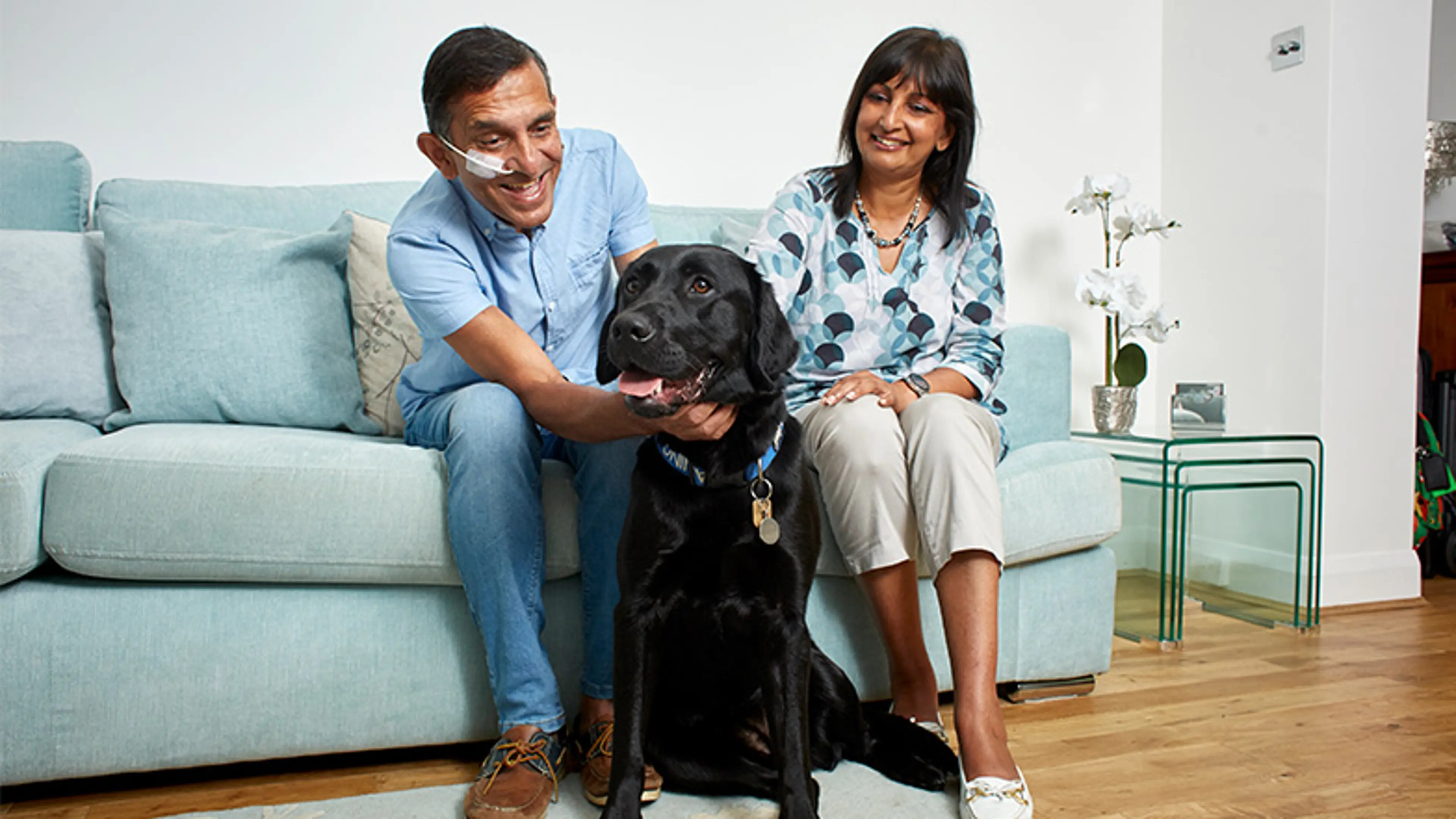
Are you interested in having a dog but have too many commitments? You could foster a future life-changer! We cover the food and bills, whilst also looking after them throughout the day.
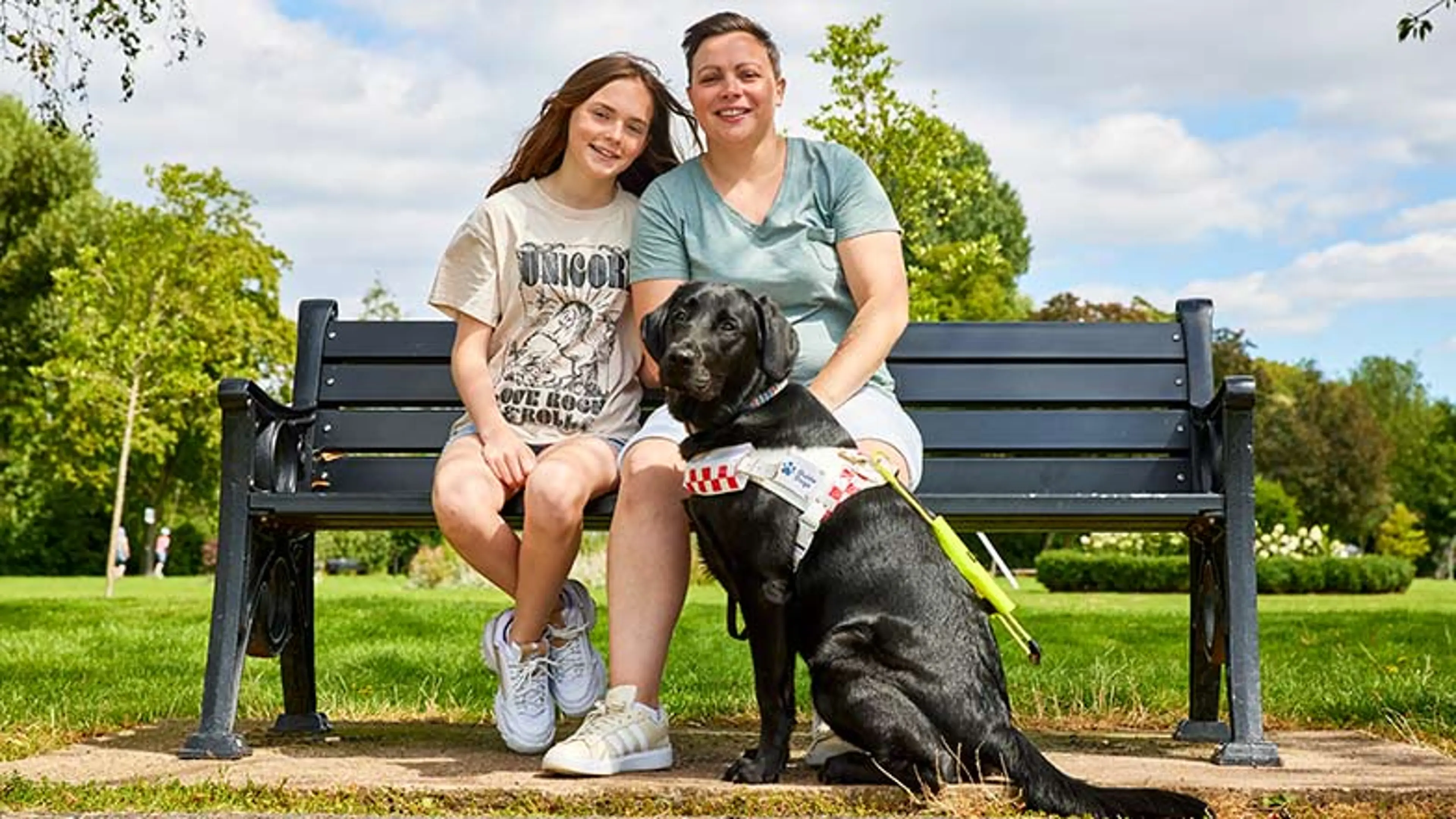
With your support, we can provide our services. You can help by donating now and making a big difference to someone’s life.
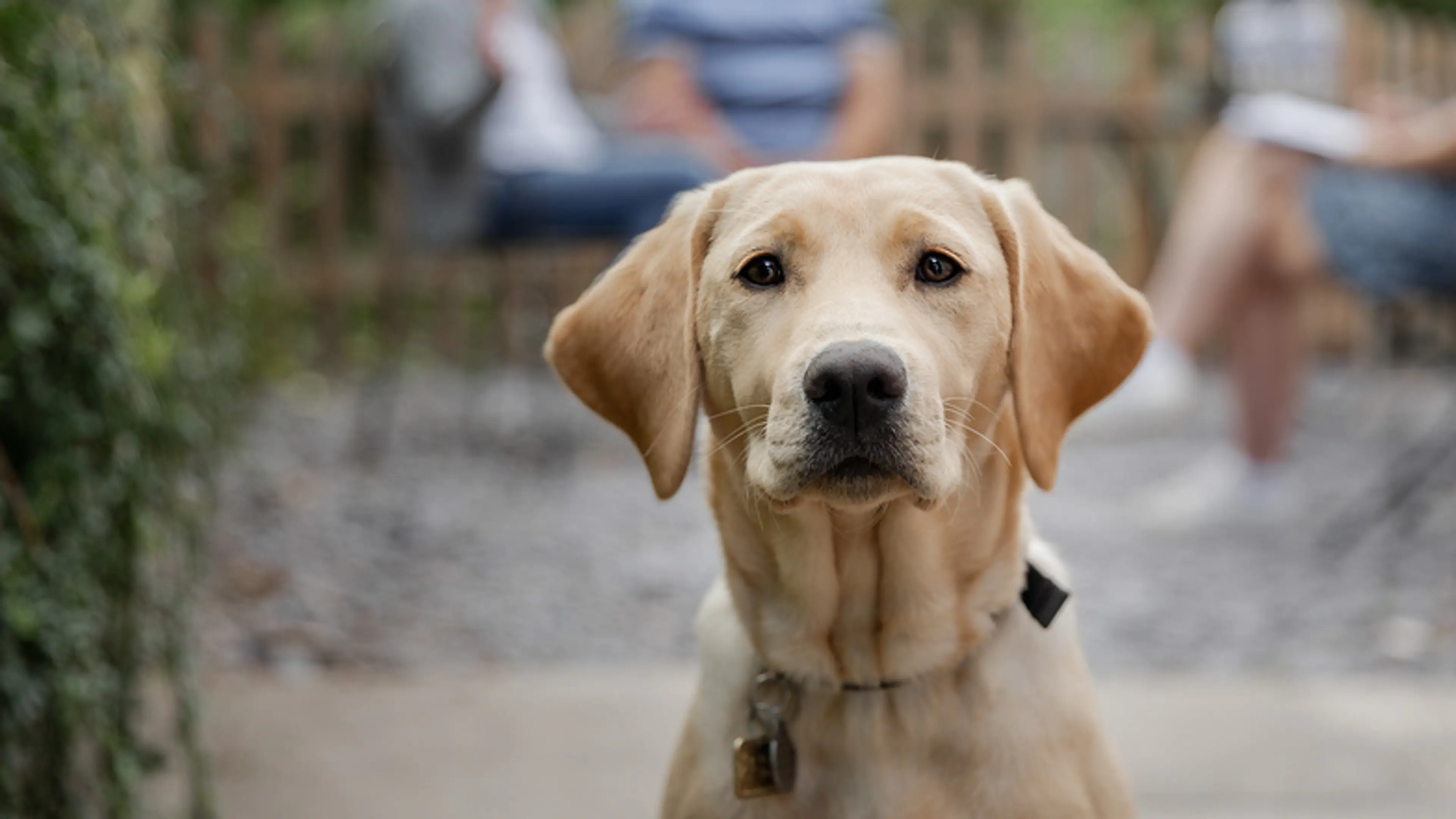
How we raise, care for, and train our life-changing dogs to help people with sight loss live the life they choose.