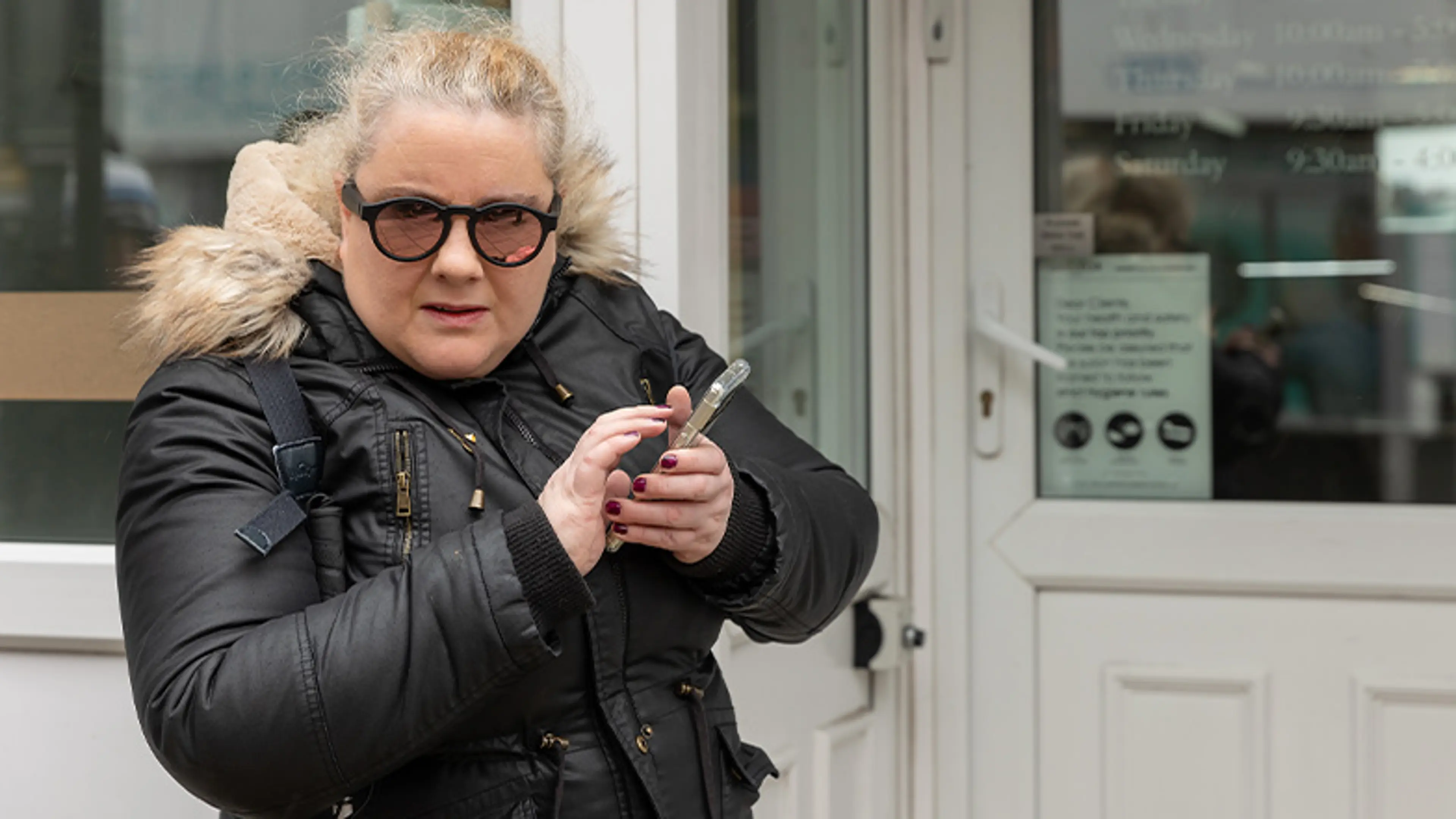
Technology for vision impairment
Find out how technology can help you live independently with sight loss.
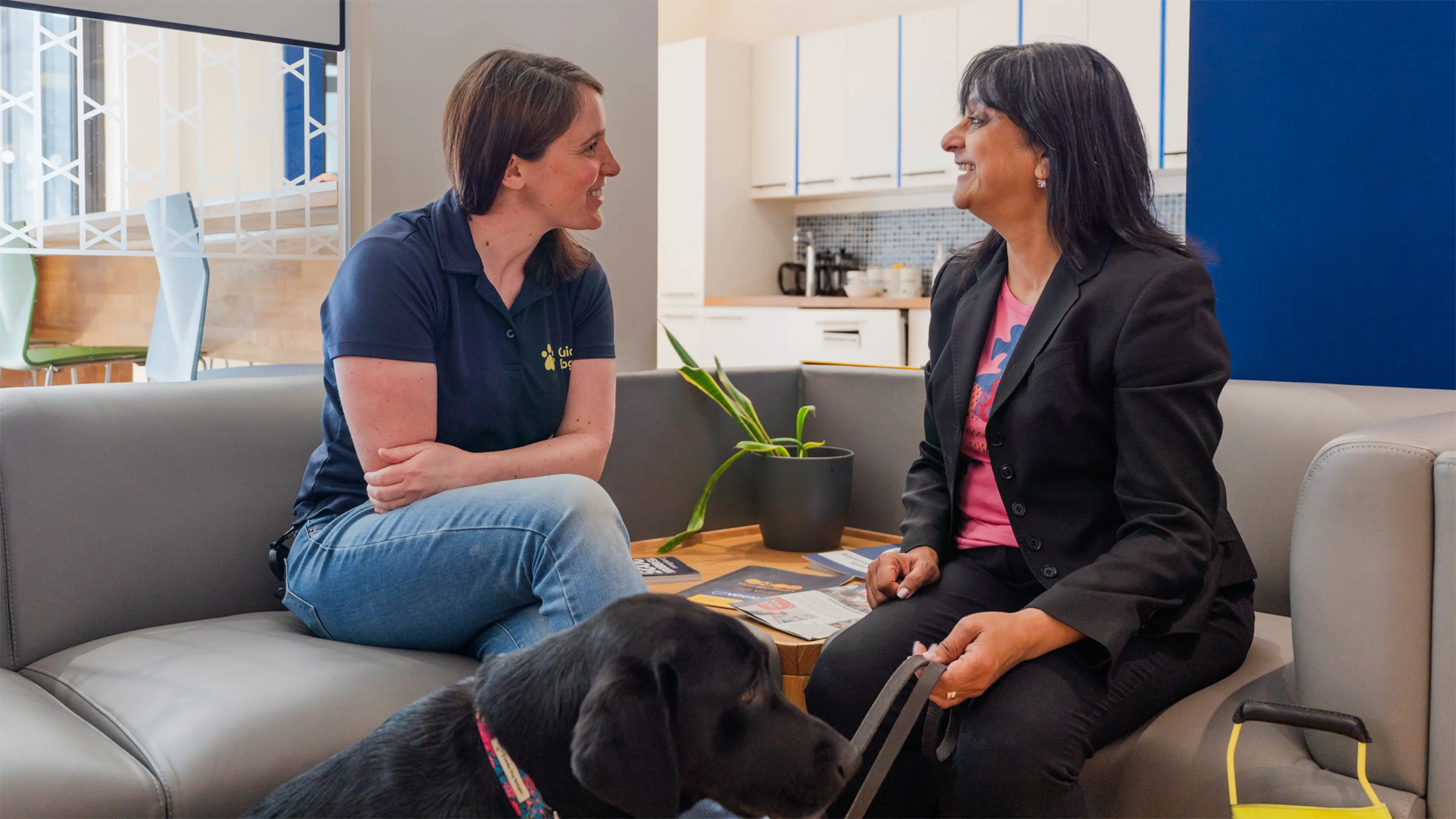
Support for adults
Find out how to get support for you, a family member or a friend who's experiencing vision problems.
Fuchs’ dystrophy – also known as Fuchs' endothelial corneal dystrophy – is an eye disease that affects a layer of cells in the cornea. The disease usually progresses slowly, so many people won’t experience symptoms, such as blurred or cloudy vision and sensitivity to light, until many years after their diagnosis.
Fuchs’ dystrophy usually affects adults in their 50s and 60s, particularly women, and it’s usually present in both eyes. You can find more information about the causes, symptoms, and treatment of Fuchs’ dystrophy on the Moorfields website.
Many people have Fuchs' dystrophy without experiencing vision problems or other symptoms such as eye pain. However, when the disease progresses, the symptoms can interfere with day-to-day life.
If your symptoms worsen – for example, if you get persistent blurry vision or pain – you may need more support with daily life, at least until treatment improves your eyesight. There are many simple and practical ways to make the most of your vision, for example:
Your ophthalmologist may be able to refer you for a low vision assessment (LVA) to explore the kind of aids that will help you. Local social services can also support you in keeping safe at home and getting around safely.
At Guide Dogs, we have a wide range of services, both with and without guide dogs, and a team of experts who can work with you to understand your needs and agree on a plan that’s right for you.
The ways we could help you:
Enquire today, so we can help to find solutions that work for you.
Please note: Whilst Guide Dogs may be able to suggest various third-party websites which may be able to assist you, those are not endorsed by Guide Dogs. Guide Dogs have no control over those third parties and cannot be held responsible for the accuracy of information and support they can provide or the suitability and quality of any products or services they provide.
Find out how technology can help you live independently with sight loss.
Find out how to get support for you, a family member or a friend who's experiencing vision problems.