Guide Dogs’ ambition is a future where every person with sight loss can live the life they choose. From designing accessible streets to taking a stand against illegal guide dog access refusals, local councils have a key role to play in realising this ambition.
Achieving our vision, where people with sight loss can live their life to the full, will not just benefit people with a vision impairment, but everyone in the community.
Using our local election manifesto, all candidates and councillors can make a positive difference for people living with sight loss in their area.
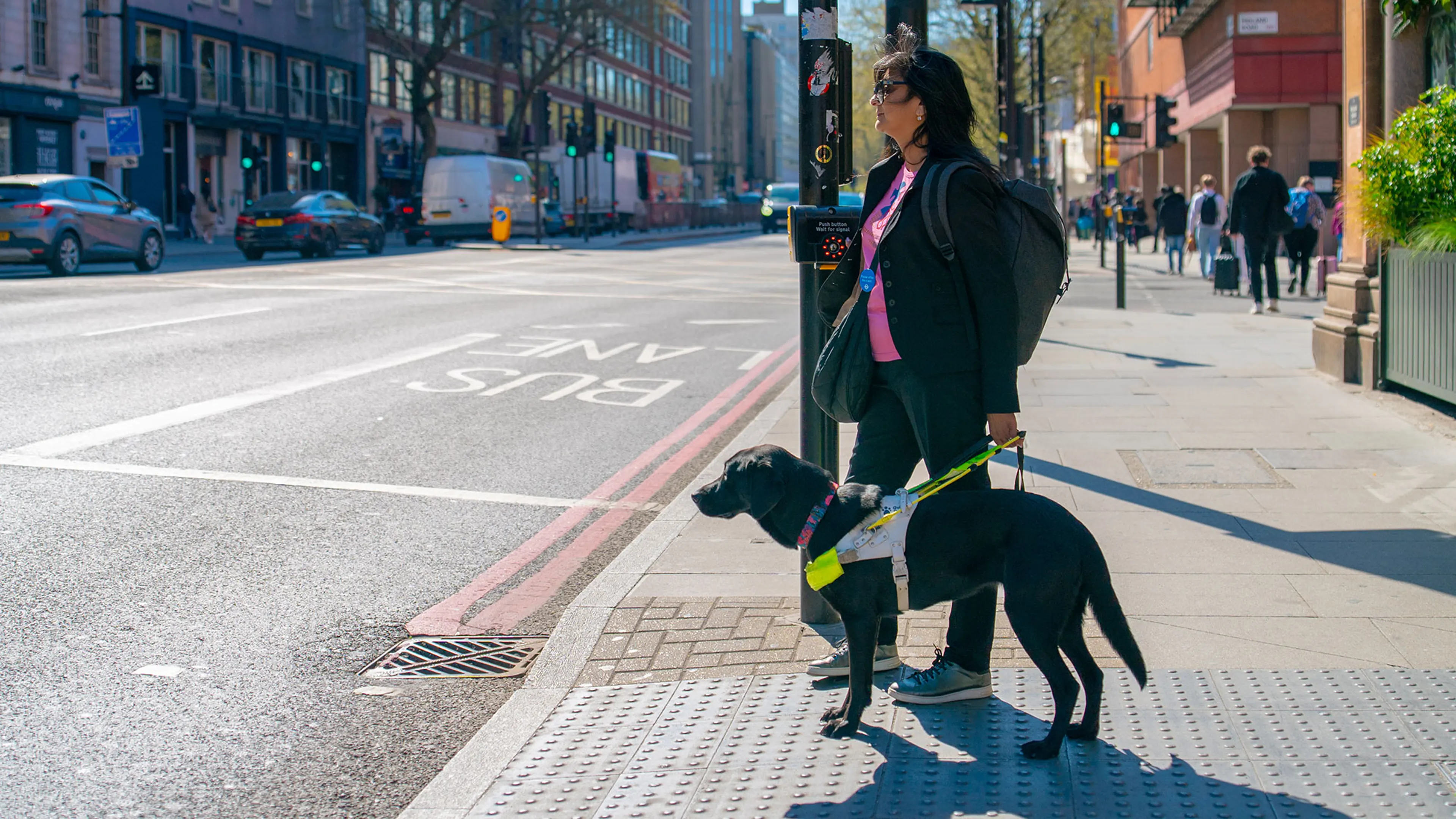
Being able to get out and about independently is something most people take for granted. However, a quarter of people with sight loss do not feel able to go out independently, due to the obstacles and challenges they face on our streets and other public spaces.
Local authorities play a critical role in ensuring our public spaces are accessible for everyone, including disabled and older people.
Research by UCL and Guide Dogs investigated the challenges for disabled people travelling in areas with features such as Floating Island Bus Stops and Shared Bus Stop Borders. The research found significant design flaws with both types of bus stop, which cause fear and distress for people with sight loss and other disabilities, leading some to avoid using buses altogether.
Local authorities, as stewards of our public spaces, must make every effort to ensure our streets are accessible, so people with sight loss can navigate public spaces confidently and independently.
_and_Mayne_022.jpg?format=webp&width=3840&quality=75)
We are calling on candidates, if elected, to make sure their local authority:
We’re campaigning to ensure that our streets and public spaces are safe for people with sight loss
The Equality Act makes it illegal for the vast majority of businesses and other service providers to refuse access to a guide or other assistance dog owner. For taxi and Private Hire Vehicle (PHV) drivers, access refusals are a criminal offence, unless the driver has a valid medical exemption certificate.
Nevertheless, refusals remain a regular part of guide dog ownership.
Each refusal is crushing, confidence shattering, rejecting, and traumatic. I always feel that I don't want to go out after - but work dictates I must.
Access refusals have a significant impact on guide dog owners. Not only can it lead to situations where people are unable to get home or to work, but it can have a crushing impact on someone’s confidence to travel independently.
Many local authorities are responsible for regulating taxis and PHVs in their area, including setting policies on issuing licences and when enforcement action is taken. The stance taken against such discrimination by local authorities varies greatly, which can have a direct impact on the likelihood of a guide dog owner experiencing an illegal access refusal.
We are calling on candidates, if elected, to make sure their local authority:
Find out more about our Open Doors Campaign
Ensuring children and young people with a vision impairment receive the support they need, as early as possible and for as long as needed, is crucial to their long-term development and opportunities in later life.
However, local authority budgets for children’s services are stretched, with 39% of local authorities in England cutting or freezing their vision impairment education service budgets over the last year. This is leading to significant shortages in the availability of specialist support, and a postcode lottery of services for children and young people across the country.
Alongside this, a lack of awareness in schools about how to effectively support children and young people with a vision impairment is creating a barrier to them fully participating in their education.
The earlier that children and young people can access essential support, and the more comprehensive and tailored this support is at home and in school, the better their experiences will be as an adult and when entering the workforce.
We are calling on candidates, if elected, to make sure their local authority:
Find out more about reasonable adjustments in schools
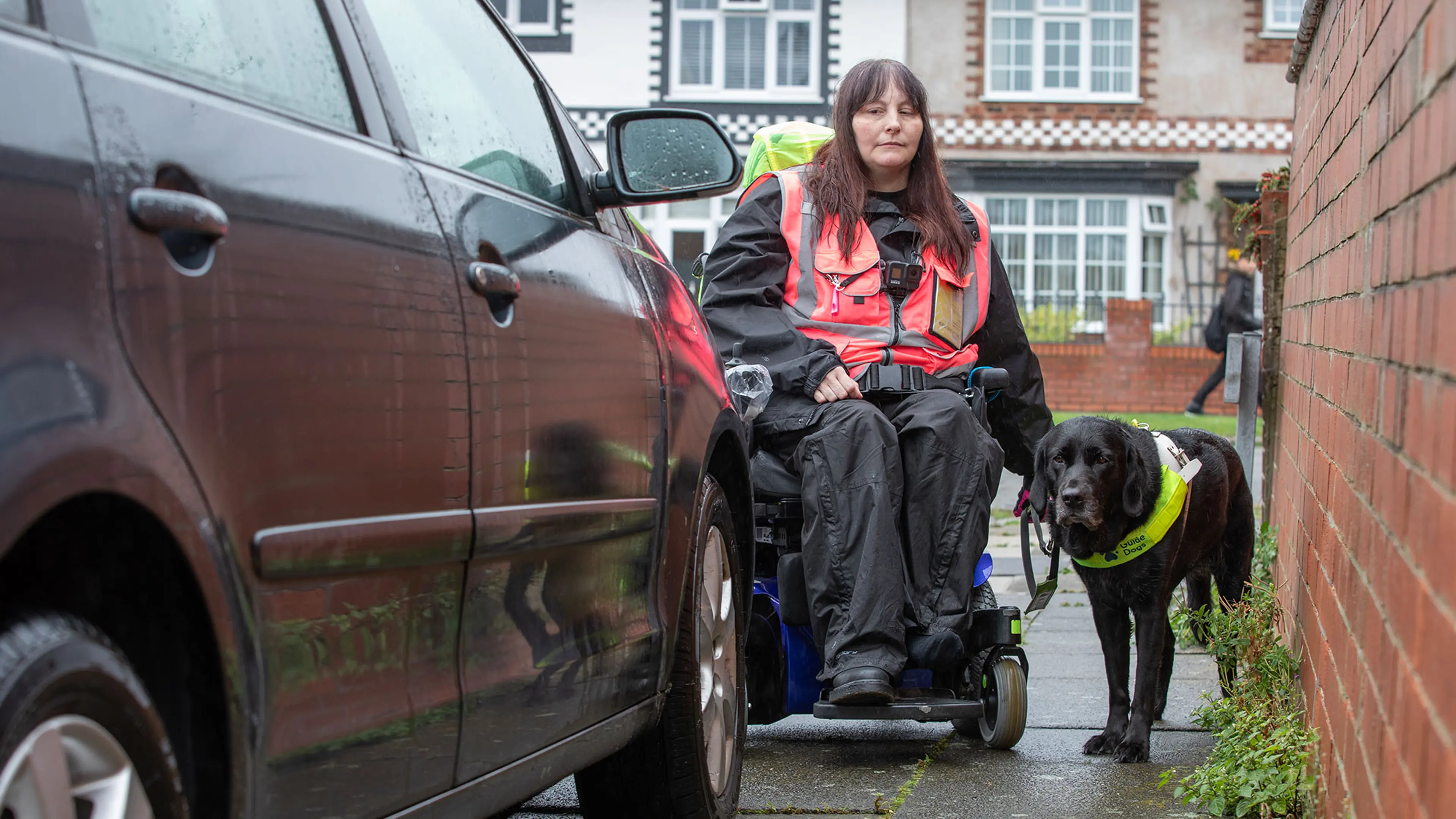
Cars parked on pavements force pedestrians into the road, putting them in danger. This is especially hazardous for people with sight loss as they cannot see cars on the road.
Local authorities have limited powers to effectively tackle pavement parking. In England (except in London) pavement parking is not a specific offence and is only prohibited in certain circumstances, for example next to dropped kerbs and controlled crossings. Local authorities may prohibit pavement parking in designated areas through Traffic Regulation Orders, but this is an expensive and lengthy process. Outside of these instances, only the police — who are time and resource limited — can take action, where a pavement parked car is deemed to be obstructing the highway.
The law on pavement parking is outdated and needs to change. This is why we’re campaigning for a new, clear law that will make pavement parking the exception, not the norm. Until then, more can be done to tackle problem pavement parking at a local level.
I think cars on pavements and street clutter really affect me. By the time I’ve walked to work, I feel like I’ve done a full day’s work already after avoiding all the obstacles. My routes go past some busy main roads and I end up stranded on the pavement waiting to go around an obstacle safely.
We are calling on candidates, if elected, to:
Please get in touch for more information on our campaigns, or to find out more about how you can make a difference for people with sight loss in your area.