Retinitis pigmentosa is a type of retinal dystrophy and it’s a genetic condition. It affects the retina at the back of the eye and causes the retinal cells to gradually stop processing light, leading to vision loss.
Although symptoms can develop at any age, they usually happen in childhood and begin with difficulty seeing in dim light, experiencing light sensitivity, and having trouble with your peripheral vision.
You can find more information about the causes, symptoms and treatments of retinitis pigmentosa on the NHS website.
Practical ways to make the most of your vision with retinitis pigmentosa include:
Your ophthalmologist may be able to refer you for a low vision assessment (LVA) to explore the kind of aids that will help you. Local social services and Guide Dogs can also support you in keeping safe at home and out and about with vision loss.
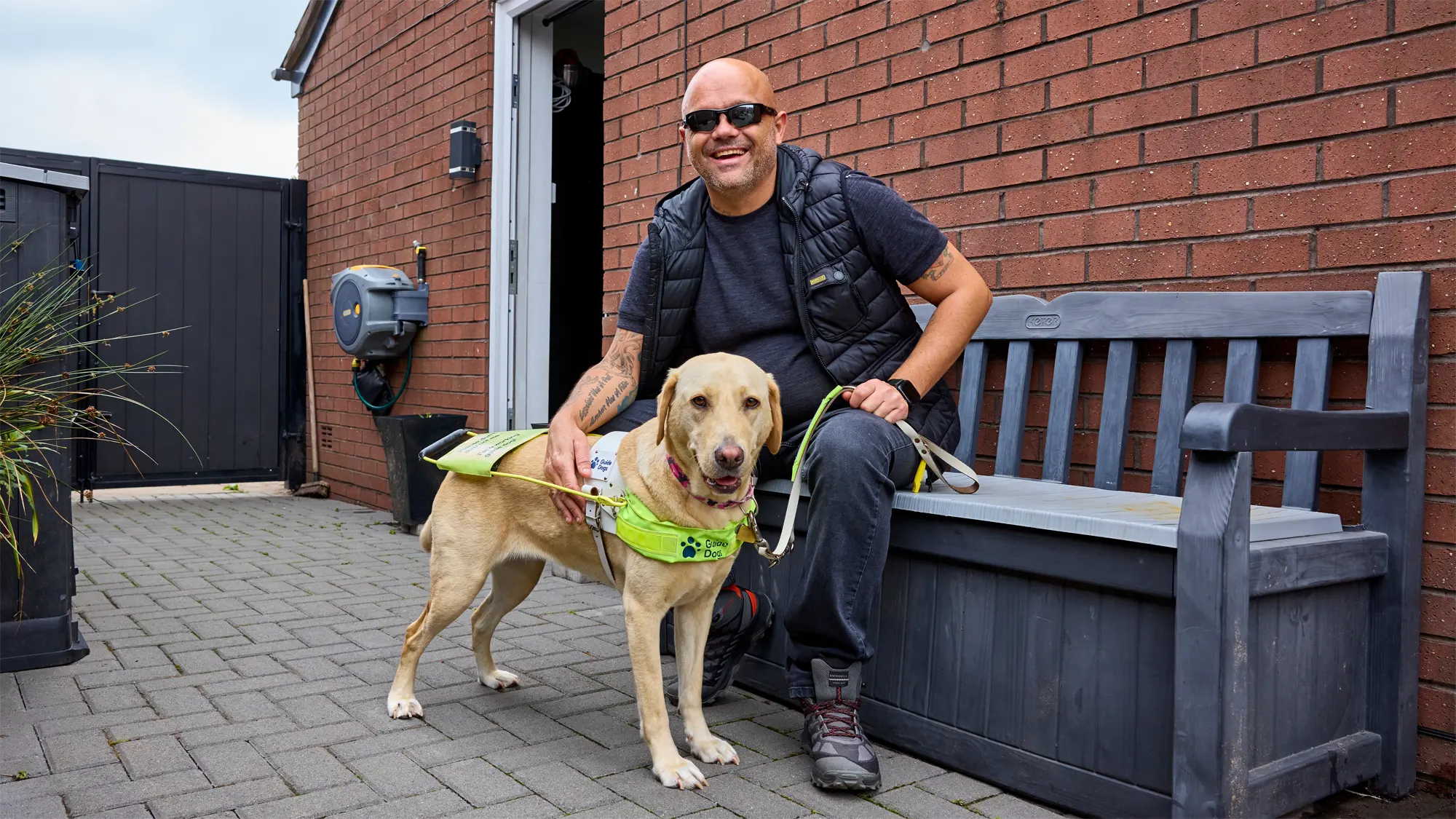
At Guide Dogs, we have a wide range of services, both with and without guide dogs, and a team of experts who can work with you to understand your needs and agree on a plan that’s right for you.
The ways we could help you:
Enquire today, so we can help to find solutions that work for you.
Because retinitis pigmentosa affects your vision, you’re likely to need some adaptations and adjustments to help you work. Employers are legally required to make reasonable adjustments to support your needs. As retinitis pigmentosa progresses, your needs might change.
Practical changes to improve your quality of life at work could include:
The Access to Work scheme offers grants that pay for equipment or services outside the reasonable adjustments employers must make. These can be used according to your needs. For example, you might benefit from help getting to and from work (e.g. a taxi) or need a support worker to help you perform certain tasks.
If you want to drive, you must tell the DVLA that you have retinitis pigmentosa. The law requires drivers to have a minimum field of vision. Since retinitis pigmentosa is a progressive condition that particularly affects peripheral vision, it’s likely that at some point, your visual field won’t meet the minimum standard. Usually, your night vision will be affected first, meaning you will only be able to drive during the day.
It’s a good idea to plan ahead and find other transport options before you need to stop driving. Look into public transport options near you and alternatives such as taxis. Local services should be able to assist you with this, and you can also find our guidance on the best apps for navigating public transport.
The support you need to live independently with retinitis pigmentosa is likely to change as the condition progresses. However, the earlier you reach out and get support, the easier it can be to adapt to daily life with vision loss.
You can contact us to find out about services and support that can be tailored to your individual needs.
If your child has been diagnosed with retinitis pigmentosa, there are a few ways you can support their development both at home and in school.
Children might need support for coping with their feelings about having retinitis pigmentosa, especially when dealing with uncertainty about the future. The right support at an early age can help them build their confidence and fulfil their potential. We can support them at every stage of their development.
When you live with a condition that has a significant impact on your sight, it can help to connect with other people having similar experiences. They often understand the emotional side of things, as well as being able to share tips and advice.
Charities such as Retina UK and communities on Facebook can help you connect with other people living with retinitis pigmentosa. This means you can get peer support from someone who understands what you and your family members are going through.
You can contact us to find out about services and support tailored to your individual needs.
Guide Dogs is committed to working alongside people with a range of vision impairments, who are registered as either sight-impaired or severely sight-impaired.
Our staff undergo comprehensive training in supporting individuals with vision impairment, to enable us to support you every step of the way through one of our many services, with and without dogs. We foster knowledge of living with vision impairment and create content in collaboration with our Vision Rehabilitation Specialists and Habilitation Specialists.
This content is periodically reviewed as we continue to embrace new knowledge and up-to-date information, in order to improve how we deliver our services and advice.
Please note: Whilst Guide Dogs may be able to suggest various third-party websites which may be able to assist you, those are not endorsed by Guide Dogs. Guide Dogs have no control over those third parties and cannot be held responsible for the accuracy of information and support they can provide or the suitability and quality of any products or services they provide.
_020.jpg?format=webp&width=3840&quality=75)
Our experts can help you find ways to live actively, independently and well with sight loss.
Learn about our range of services to support children and young people, helping to provide them with the skills they need to live an independent and active life.
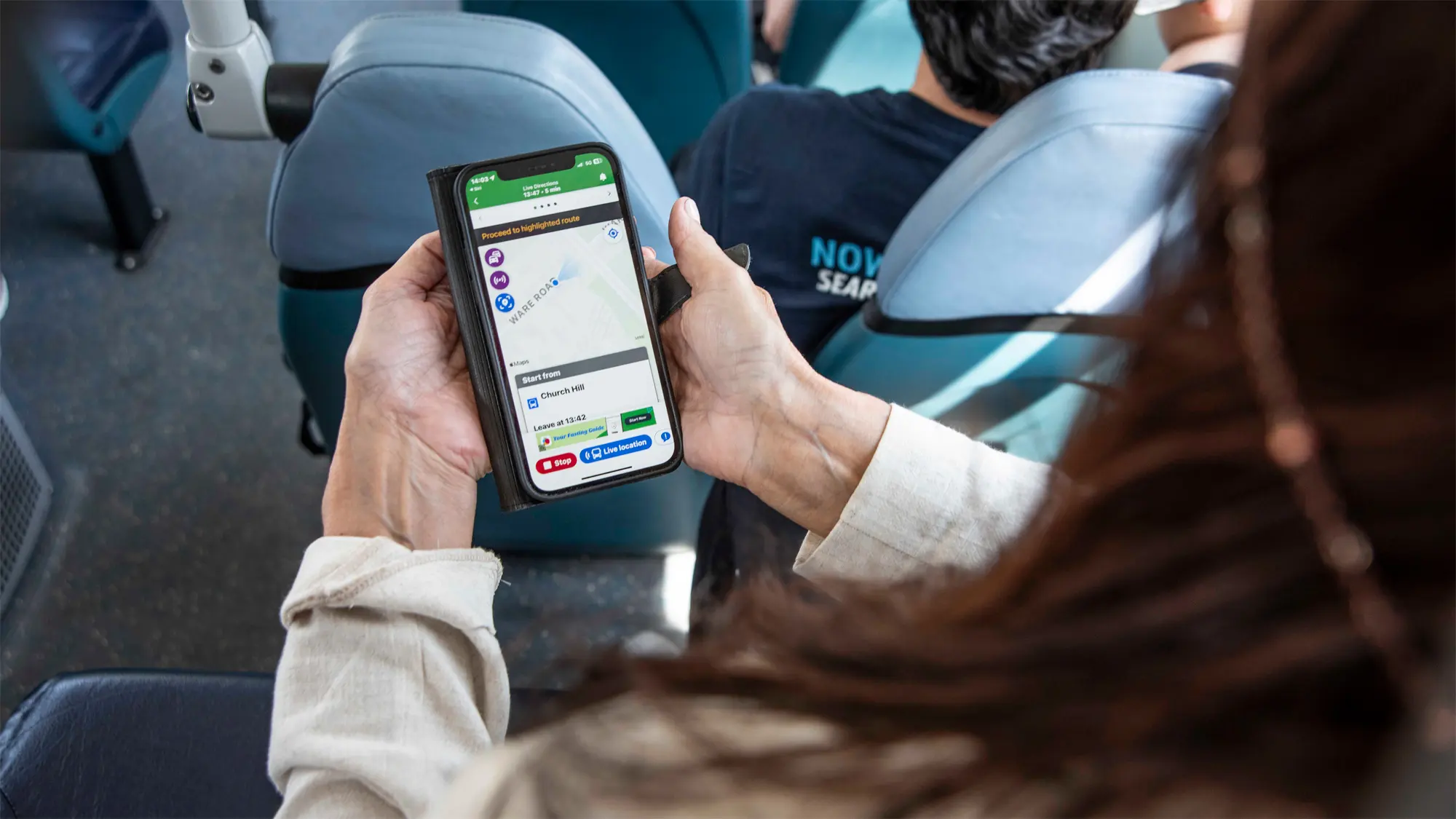
Learn about apps and helpful technology that can support you with everyday tasks.