What can the Amazon Echo do?
If you’re a person with vision impairment, the Amazon Echo could support your independence as it enables users to control their smart home products, meaning you could control your heating, plug sockets, lights, door locks, vacuums, cameras, and more – all without sighted assistance.
How the Amazon Echo is useful for people with sight loss
As a voice assistant, Amazon Alexa is a great tool for people with vision impairment as it is completely voice controlled. There are no screens to swipe, buttons to press or controls to turn, even the volume is turned up or down by a voice command.
Specific functions for people with sight loss include:
- Show and Tell which helps people who are blind or partially sighted to use any Echo Show to identify packaged foods that can be hard to identify like canned or boxed foods. You just say "Alexa, what am I holding?" and it will help you place the item in front of the camera.
- Alexa's VoiceView feature is a screen reader for Echo devices with a touchscreen so you can use gestures to navigate the device while VoiceView describes the actions you perform on screen.
- Screen Magnifier allows you to pan from side to side or zoom in and out to enlarge items on the screen for improved visibility.
- There are thousands of Alexa “skills” you can download to support your daily life. One of our favourites is the Guide Dogs for the Blind skill, which is a great support tool with the latest advice on how to look after your guide dog. After enabling the Guide Dogs skill, just say “Alexa, open Guide Dogs” and then ask away.
How much does the Amazon Echo cost?
There are lots of different Echo products and each one has a different price. Typically, the newer models and models that include more features and functions cost more.
Amazon Echo Dot
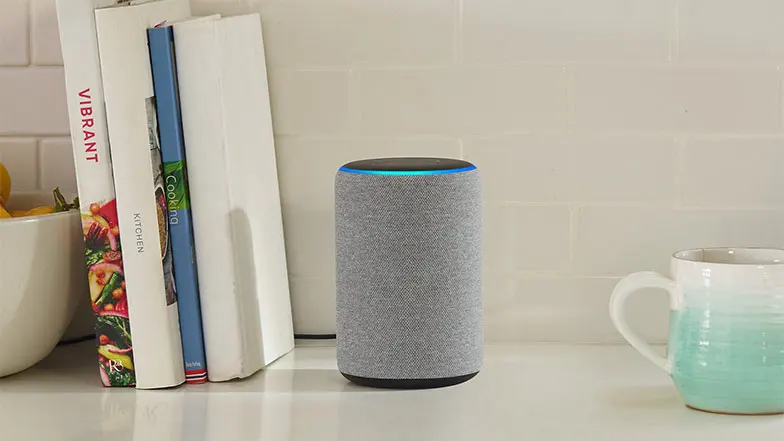
The 3rd gen Amazon Echo Dot is the most popular as its small size also comes with a lower price at £39.99. The new Echo Dot is slightly bigger and with improved audio is priced at £54.99 without a clock display.
Echo Dot Max
The latest generation retails at £99.99. It features an improved two-way speaker for superior sound that automatically adapts to your space. This latest generation comes with built in smart home hub.
Amazon Echo Pop
The latest generation retails at £44.99, one of the least expensive in the range. It’s the smallest of the Echo speakers, making it portable and ideal for small spaces.
Echo Spot
The latest generation costs £79.99. This entry in the Echo range is a sleek smart clock and utilises Alexa to help navigate your day.
Echo Studio
The latest generation’s price is £219.99. It features the best speakers in the range, with sound that also adapts to the surrounding space. The device supports spatial audio and Dolby Atmos for a true surround sound experience.
Other Amazon Echo devices
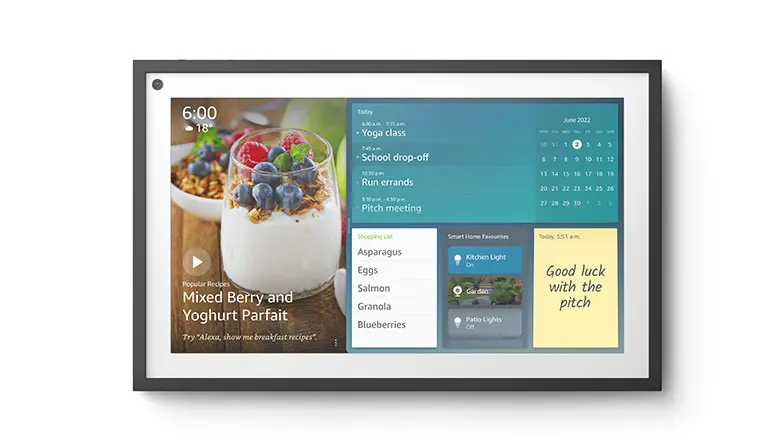
The Echo Show includes a screen to have hands-free video calls, with 2nd Gen Echo Show 8 being the most popular.
What is Alexa and how does it work?
Alexa+ Next Generation AI Assistant
Alexa+ is Amazon’s next-generation AI assistant with ambient intelligence to help you with daily tasks. It remembers previous conversations and context, so you shouldn’t need to repeat yourself, and it becomes familiar with your household routine, making Alexa+ the most practical generation yet. This generation is designed to act in the real world and can complete tasks from start to finish, such as making a restaurant reservation.
Alexa+ started rolling out in the UK from 19th March 2026 as part of an Early Access program.
I love checking the weather, setting timers and accessing audiobooks from Audible and RNIB Reading Services just by talking to Alexa on my Amazon Echo Dot smart speaker.
How can Alexa help at home?
There are lots of ways Amazon Alexa can help at home by:
- Managing your calendar, to-do lists and announcing plans for the day as well as setting alarms.
- Creating a routine for your connected devices, like turning the lights or heating on or off at the time you’d like each day. For example, you could set up a routine that turns off your lights, locks your doors, and sets your alarm by saying "Alexa, goodnight”. You can also create routines for different times of the day, like first thing in the morning to announce the weather, news headlines and your calendar.
- Making calls and messaging people.
- Sending messages from one device to another within your home.
- Creating a shopping list, adding products to a shopping basket, or finding and reading recipes to cook along with Alexa skills.
- Asking almost any question you like, and it will search the internet for an answer.
- Listening to radio, podcasts, and music. You can also turn on and select a TV programme through Amazon Fire TV if you have it.
- Keeping in touch with friends and family who also have an Alexa Device through Alexa Drop. It works like an intercom system to talk to someone through another device, either in your own home or theirs.
How to set up the Amazon Echo and Alexa
Amazon Echo must always be plugged in and connected to the internet, and you want to make sure it is somewhere you can hear it, and it can hear you speak. Plug in your Echo device using the supplied power adaptor and the Echo’s light ring will spin blue around the base of the device, and then turn orange for setup mode. There is also a sound once it is in set-up mode too.
Once plugged in then your device can be set up in these easy steps:
- Download the Amazon Alexa app for your Android or iOS device.
- Open the app and sign in using your Amazon account.
- Tap the "Devices" icon on the bottom right corner of the screen.
- Select "Echo and Alexa" and then select "Add Device."
- Choose your Amazon Echo device and follow the on-screen instructions to set it up. The app will guide you through the setup process, including connecting your Echo to wifi and selecting your preferred language.
- Once your Echo is set up, you can start using Alexa by saying "Alexa" followed by a command or question.
Test to see if your smart speaker is set up
It’s easy to check if your echo speaker is set up, just say "Alexa, what's the weather like today?" If it responds with the current weather information, then your smart speaker is set up with Alexa. If not, you might need to go through the setup process that came with your smart speaker.
Best Alexa-compatible devices
There are lots of Alexa-enabled devices and gadgets that can work with your Amazon Echo and Alexa.
.png?format=webp&width=3840&quality=75)